
In October 1962 the first instalment of the James Bond franchise, Dr No, opened in cinemas. To most movie buffs, the stars of the film are the charismatic Sean Connery and alluring Ursula Andress. For vintage watch enthusiasts, however, the true scene-stealer is Bond’s Swiss-made Rolex Submariner 6538.
Over six decades on from the big-screen debut of Britain’s most famous secret agent, an intriguing find has surfaced suggesting that during the early 1960s the English watchmaker Smiths was actively developing a new military wristwatch.
Had the project reached maturity perhaps Commander Bond, the archetypal patriot, may have checked the time on a watch not made in Geneva but in Cheltenham.
What you are about to read suggests that such a tantalising prospect was, at the very least, a distinct possibility.
Now pay attention, 007…
An Enigma Hiding in Plain Sight
In April 2025 an unusual Smiths wristwatch, marked W10/6645/0308/61, appeared for sale at a regional auction house in Lincolnshire.
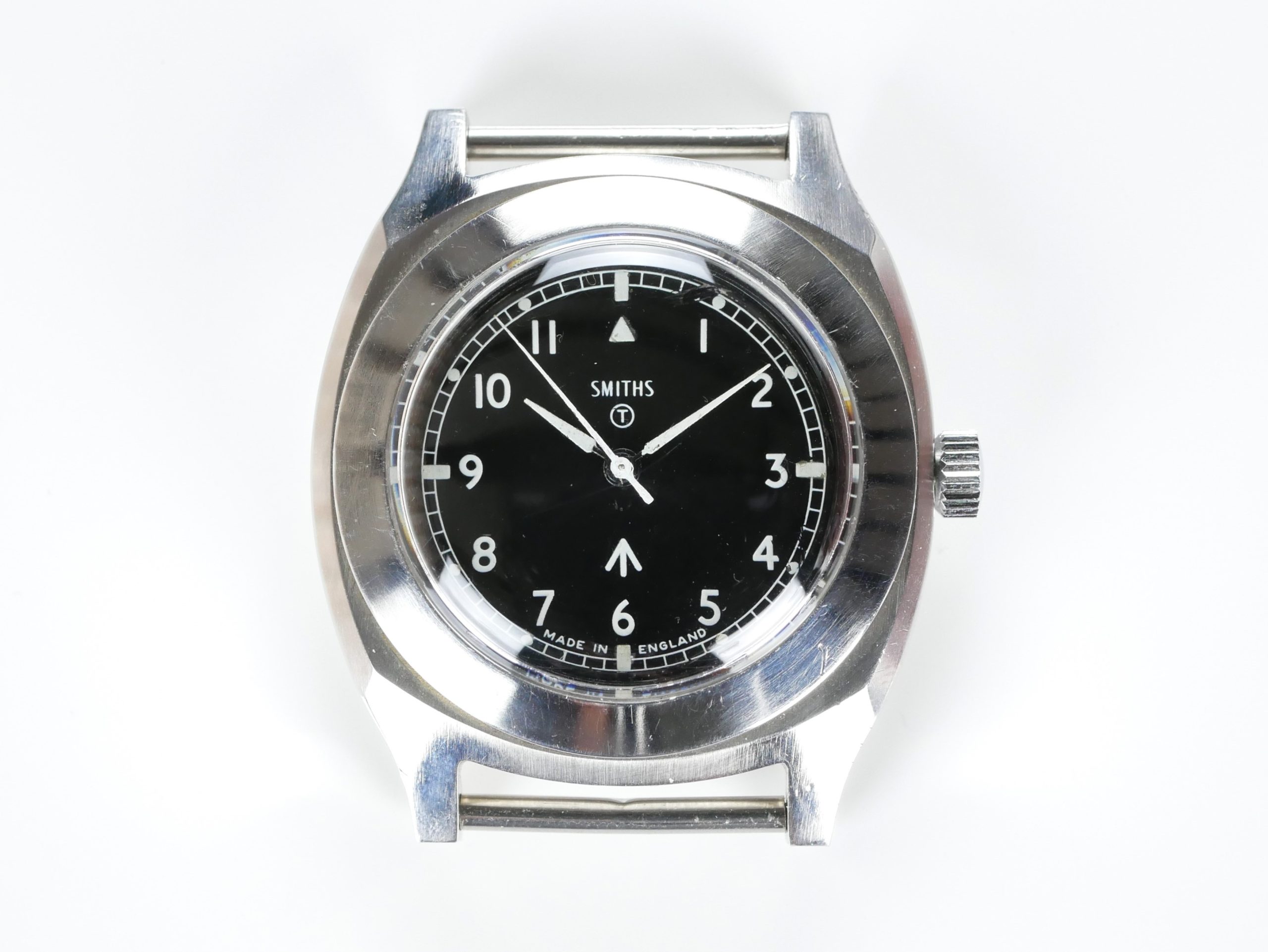
Appropriately for a timepiece proudly bearing the insignia, ‘Made in England’, the sale was held on the 23rd of April, this being St George’s Day.
This auction was not the first time the watch had been documented. The exact same watch, simply described as ‘a rare test item’, has featured in Konrad Knirim’s book on British Military Timepieces since it was first published in 2009.
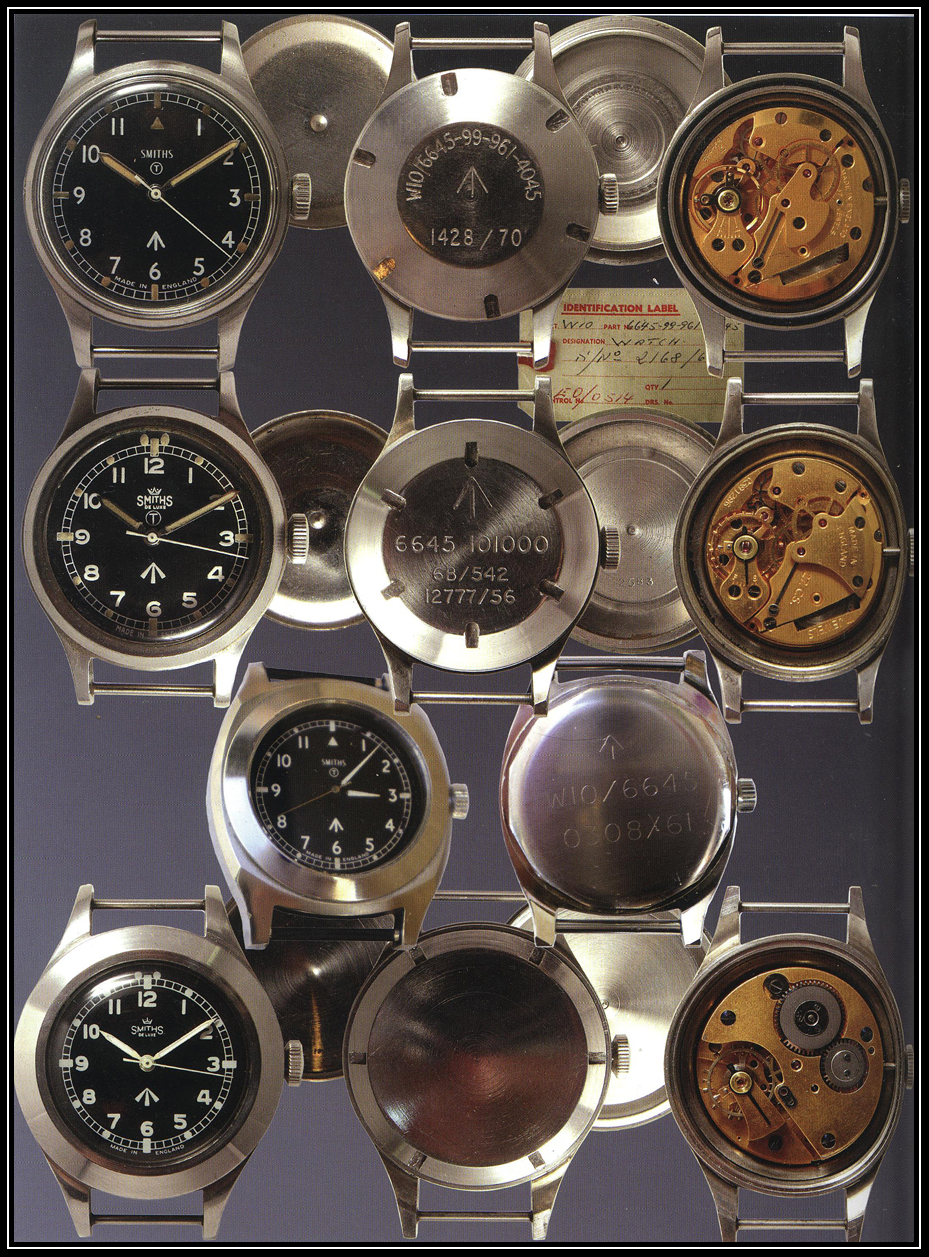
At the time of its publication over 17 years ago, interest in military watches, particularly Smiths, was modest and a Smiths W10 could be acquired for as little as £50.
The auctioneers confirmed the watch was being sold by an elderly collector who had owned it for approximately 40 years, having purchased it from Anchor Supplies, the military surplus store based in Nottingham. We have since had the pleasure of meeting the seller and their subsequent kind assistance has proved invaluable.
Anchor Supplies are well-known among seasoned UK military watch enthusiasts, with many of the stellar pieces in their collections having been acquired from there years ago. Naturally, those purchases would have been at a fraction of the cost they would be today.
The fact that the watch was acquired from such a long-standing and reputable supplier of ex-military equipment provides it with an obvious direct route back to the Ministry of Defence (MoD). Interestingly, three examples of the rare Smiths Mk 11 prototype (Navigator) from the early 1950s were discovered in a similar fashion, having been sold in a government disposal auction in 1982.
The sale attracted significant interest from collectors and enthusiasts, some of whom offered their opinion as to the possible identity of the watch and its potential value. This fevered speculation seems to have persuaded the auctioneers to amend their catalogue immediately prior to the sale and describe the watch as a possible Smiths Navigator.
After some intense bidding, we acquired the watch, which set us on a journey to discover its construction, potential purpose and its historical significance.
Making a Case
At first glance the watch’s proportions are striking, albeit a little odd, so much so that it would not look out of place in Q’s workshop.
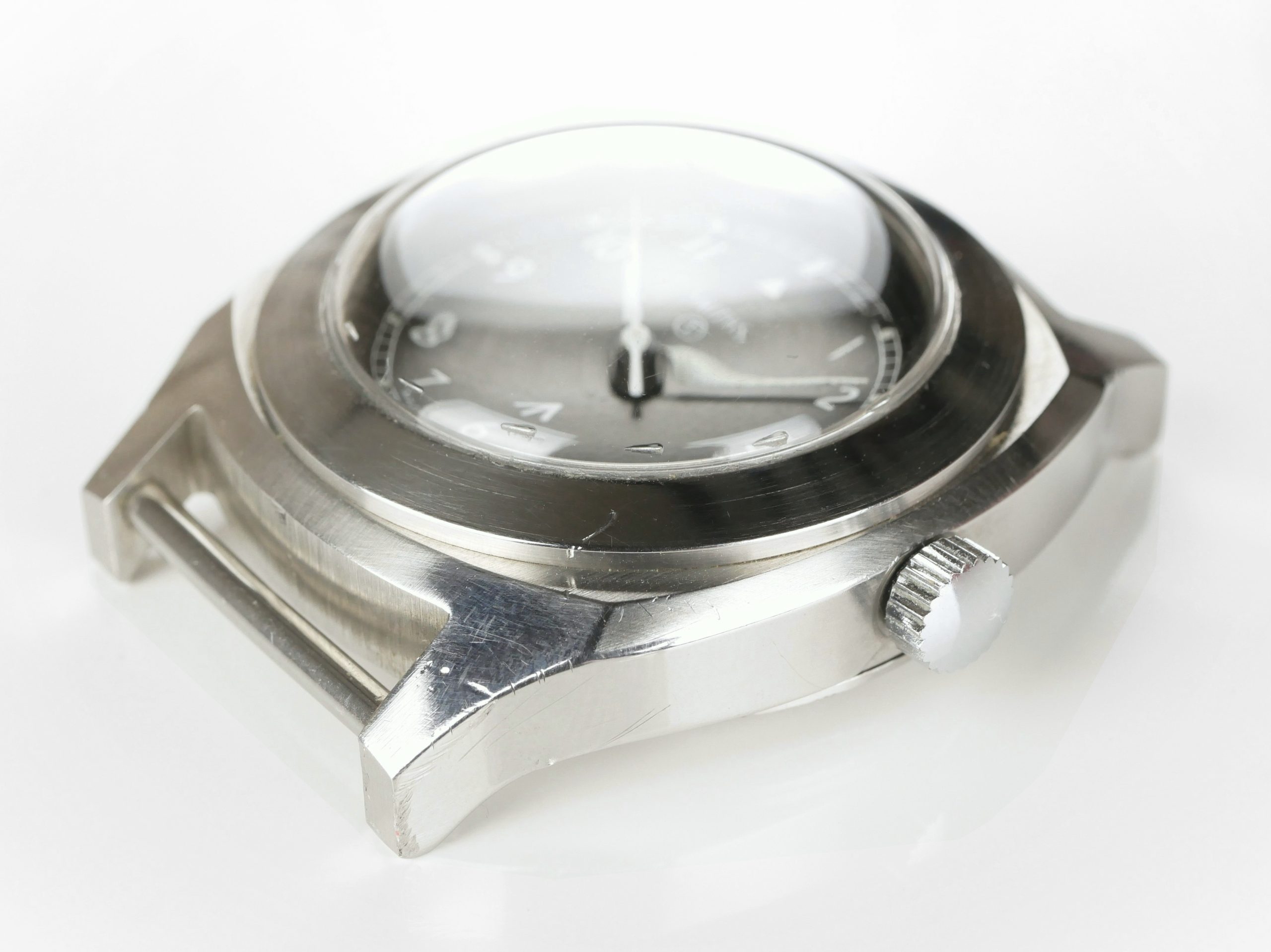
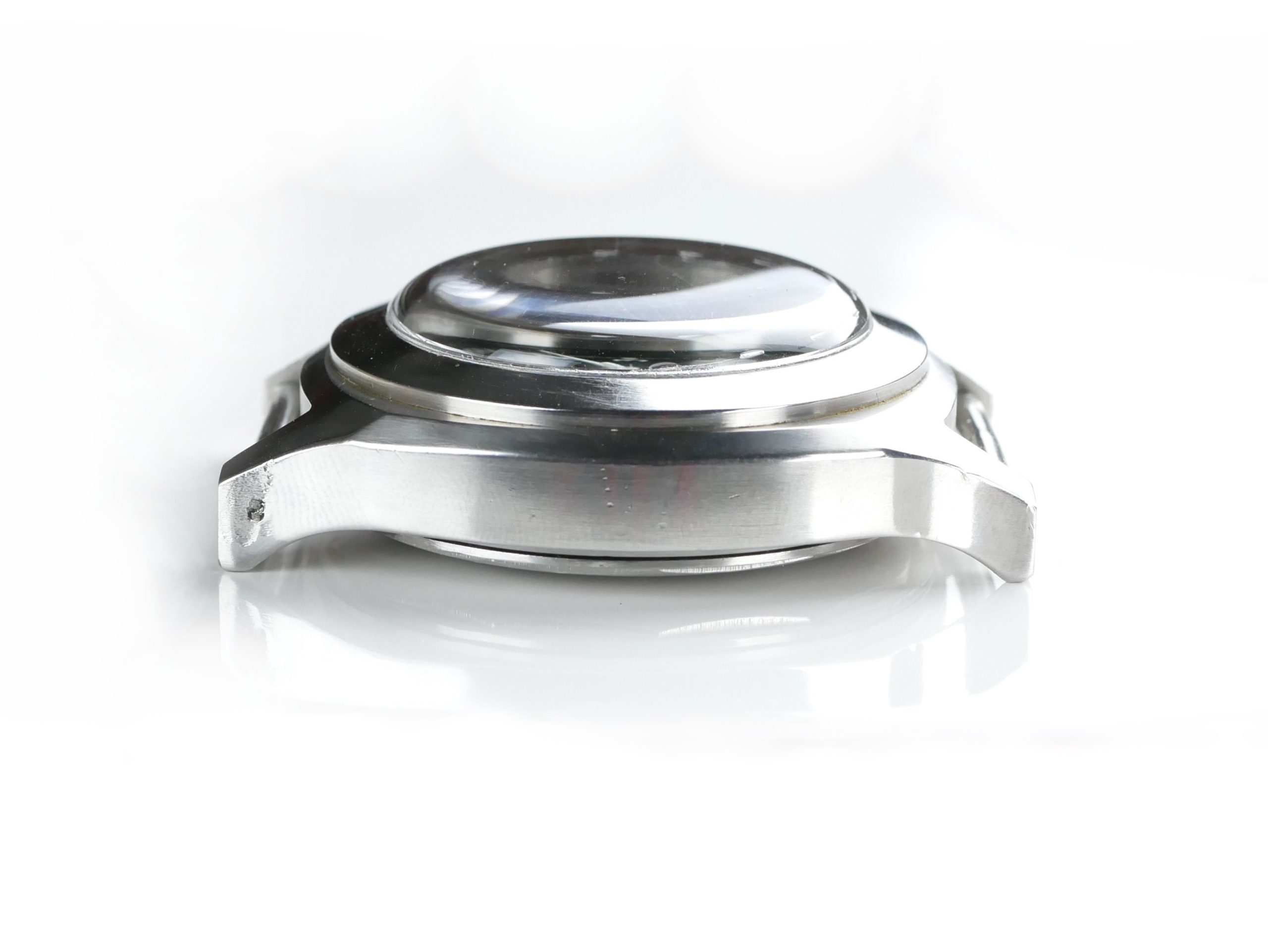
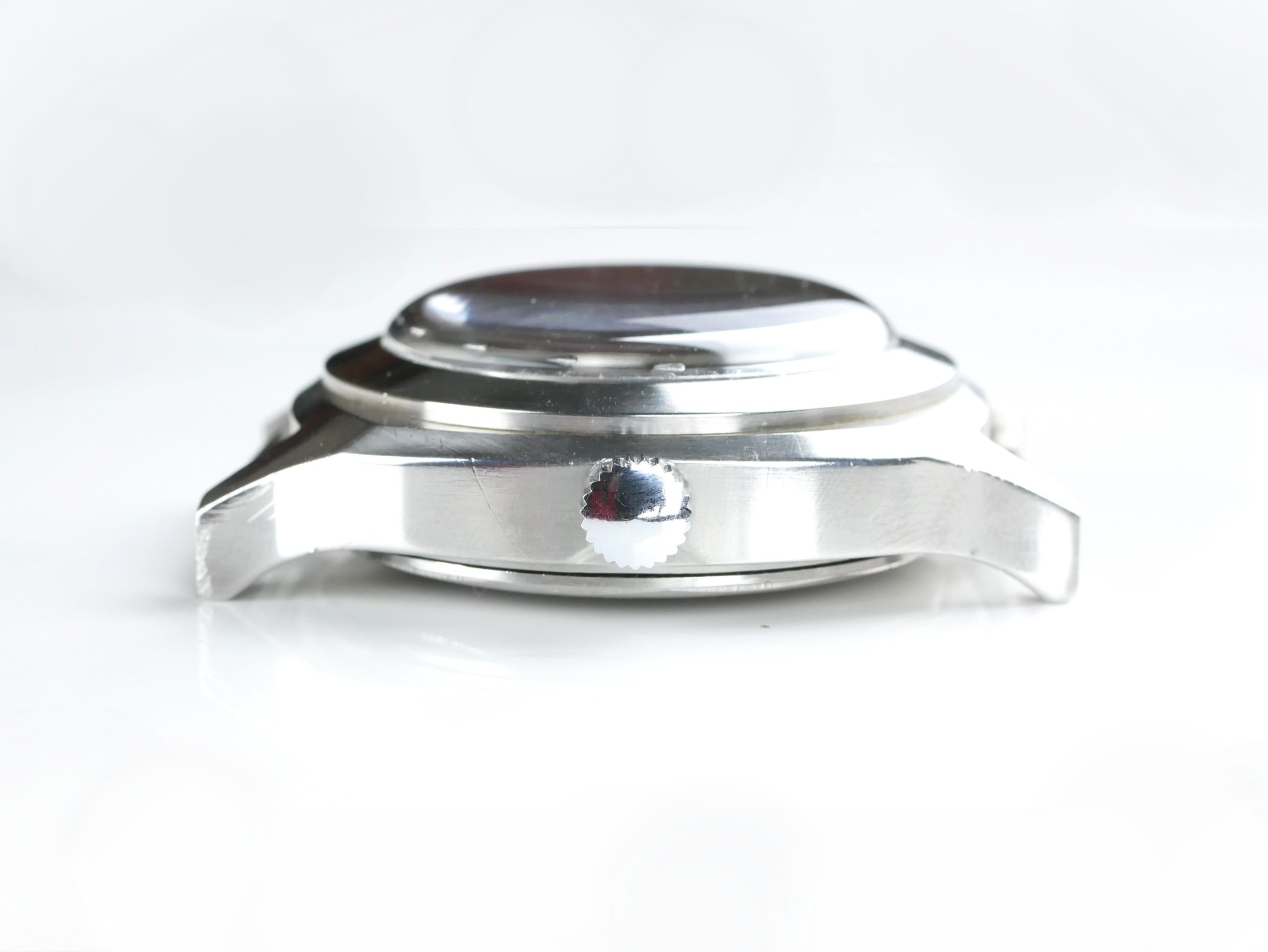
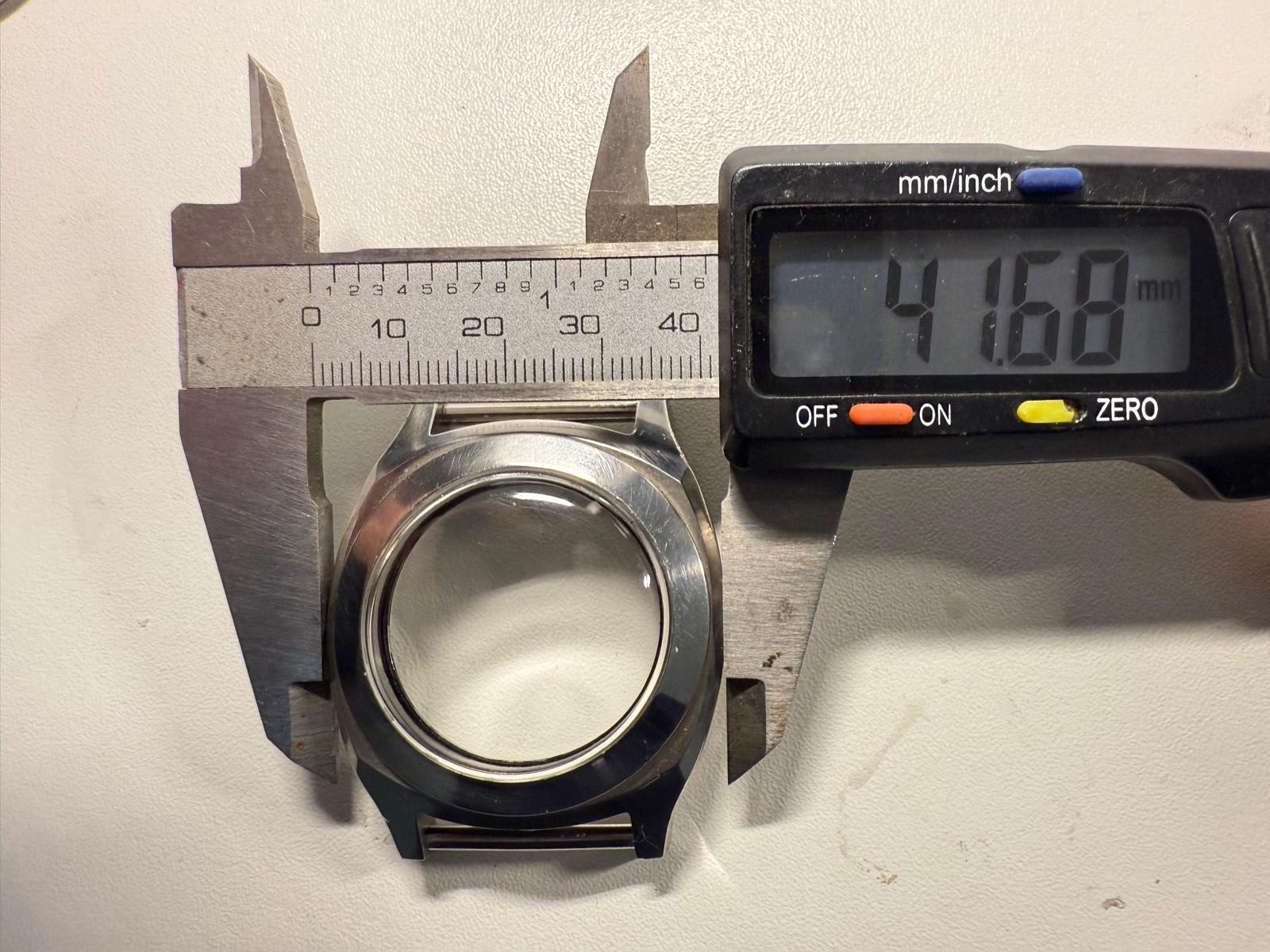
However, closer scrutiny of the large cushion case with its smooth chamfered bezel, measuring approximately 42mm in diameter, reveals some familiar traits with other wristwatches from the 1960s and earlier.
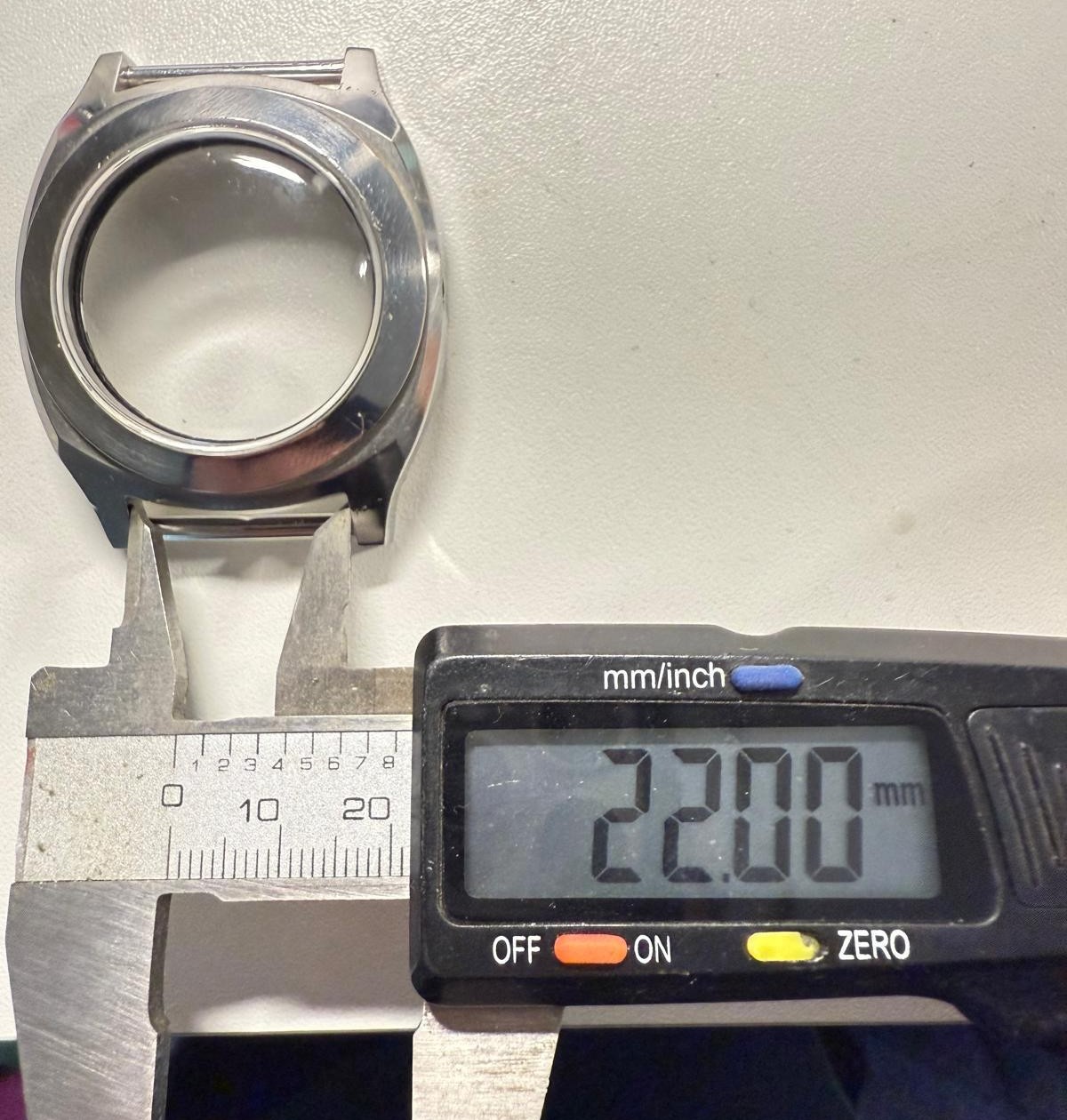
The heavy screw-down case with rubber gasket (seal) features 22mm short wide lugs and what appear to be thick, bespoke simple spring bars. Such characteristics are consistent with tool watches of the period, particularly dive watches.
The case has been constructed from a solid block of high-quality stainless steel. Its quality and precision craftsmanship, along with the raw lathe and tooling marks, confirm it was undoubtedly produced by a highly skilled and experienced hand.
Some have suggested the watch’s chunky proportions bear a fleeting resemblance to the Smiths Navigator and rare experimental Rolex Deep Sea Special from the 1950s. It also shares some striking similarities to the relatively unknown Zenith S.58, which will be mentioned again later.
The thick case would have offered excellent protection to the movement. Used in conjunction with a soft iron dial, movement ring and dust cover to form an internal Faraday cage, it would have likely helped to enhance the potential anti-magnetic properties of the watch.
The case bears no maker’s marks, raising the likelihood that it was manufactured in-house by Smiths themselves. Smiths are known to have produced watch cases for the trade during the 1960s, some featuring a similar multi-faceted screw-down case back.
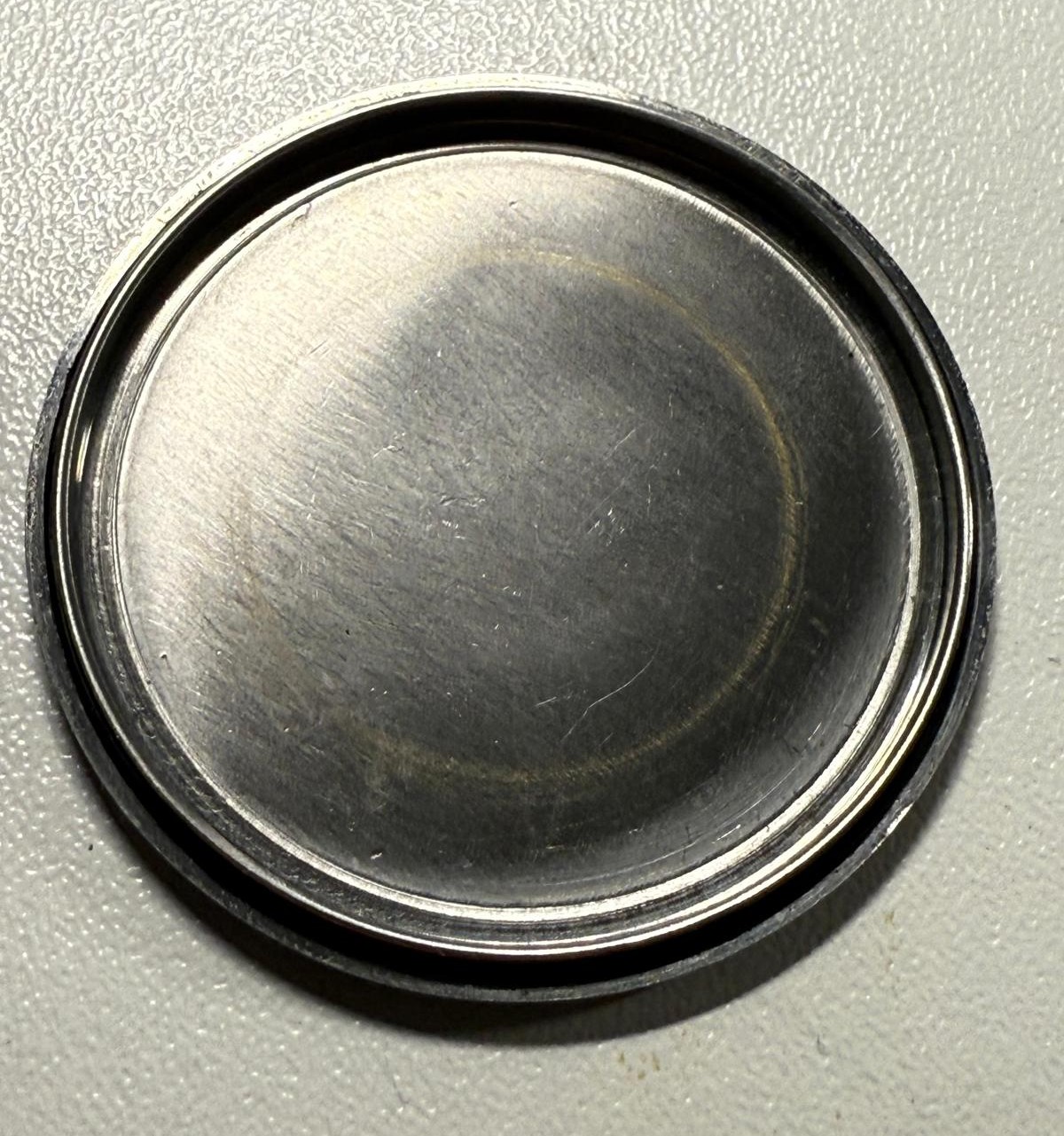
It is also feasible the case was produced by the English casemaker, Dennison, who had supplied the cases for the earlier Smiths De Luxe General Service (GS) wristwatches from the 1950s. Minutes between Smiths and the Ministry of Supply from 1954 suggest that Dennison had a track record of providing watch cases that promoted their own designs rather than the specification laid down by the MoD.
The thick domed acrylic crystal, which has presumably been fitted to increase water pressure resistance, is typical for the period and appears original. Curiously, the crystal is loose and is lacking the usual tension ring required to secure it.
The push-pull crown resembles those found on other Smiths wristwatches. The design and construction of the crown and winding stem are again typical for the early 1960s.
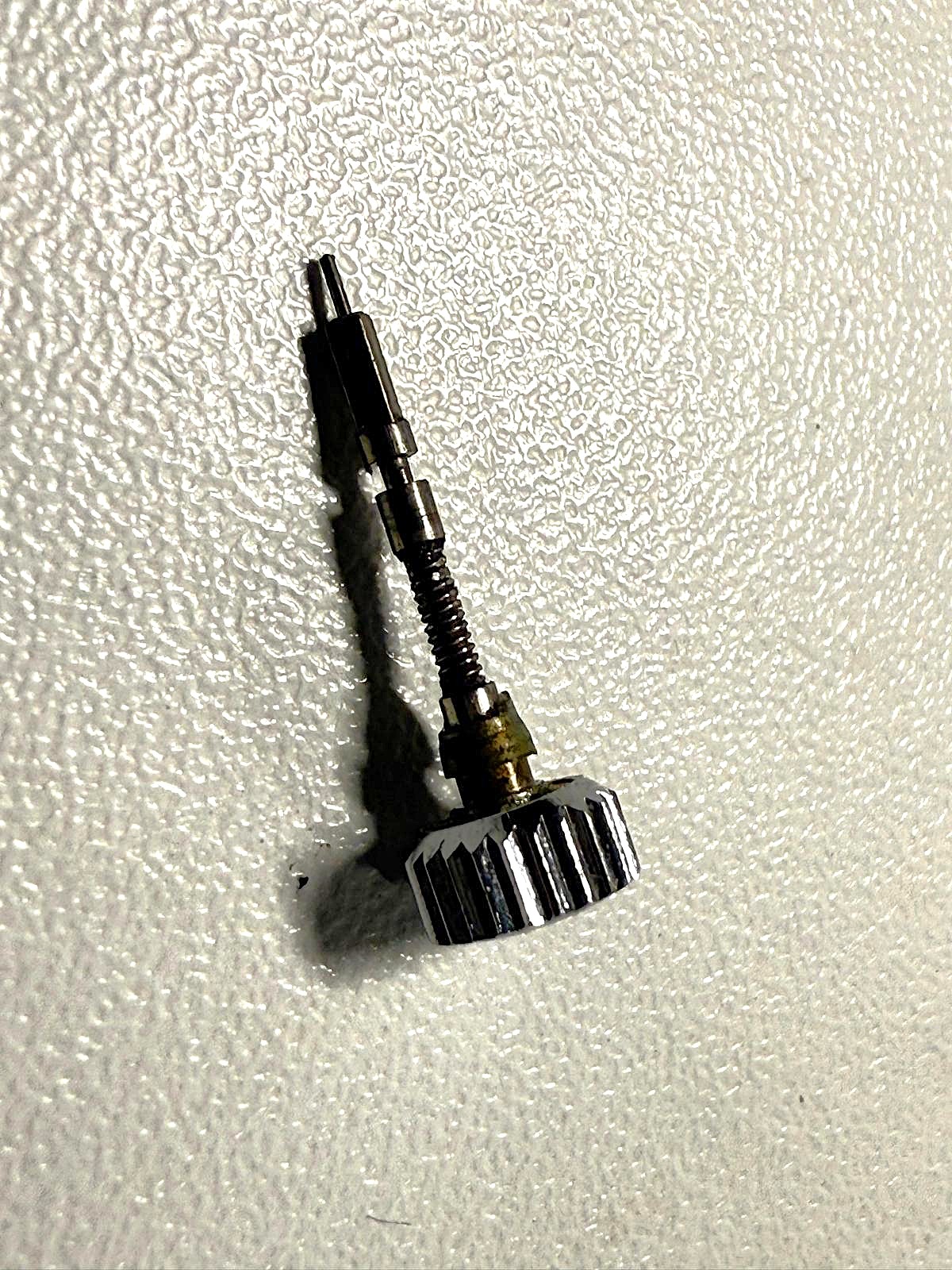
The crown features an internal rubber seal which sits against the case tube. The remnants of the old rubber seal are still present which, when new, would have offered the crown a reasonable degree of water resistance. It is possible the crown may have been adapted and improved to increase its water resistance had the watch been further developed.
Except for the crown, the watch would likely have been water resistant to 200 metres or more, this being comparable to the Omega Seamaster 300.
Taken as a whole, the case design strongly suggests an intended underwater application. This aligns with Smiths’ known work on waterproof case technology during the late 1950s. One such patent (No. 881391) relates to the improvement of waterproof watch cases, including the use of waterproof gaskets, which was applied for in 1959 and granted in 1961.
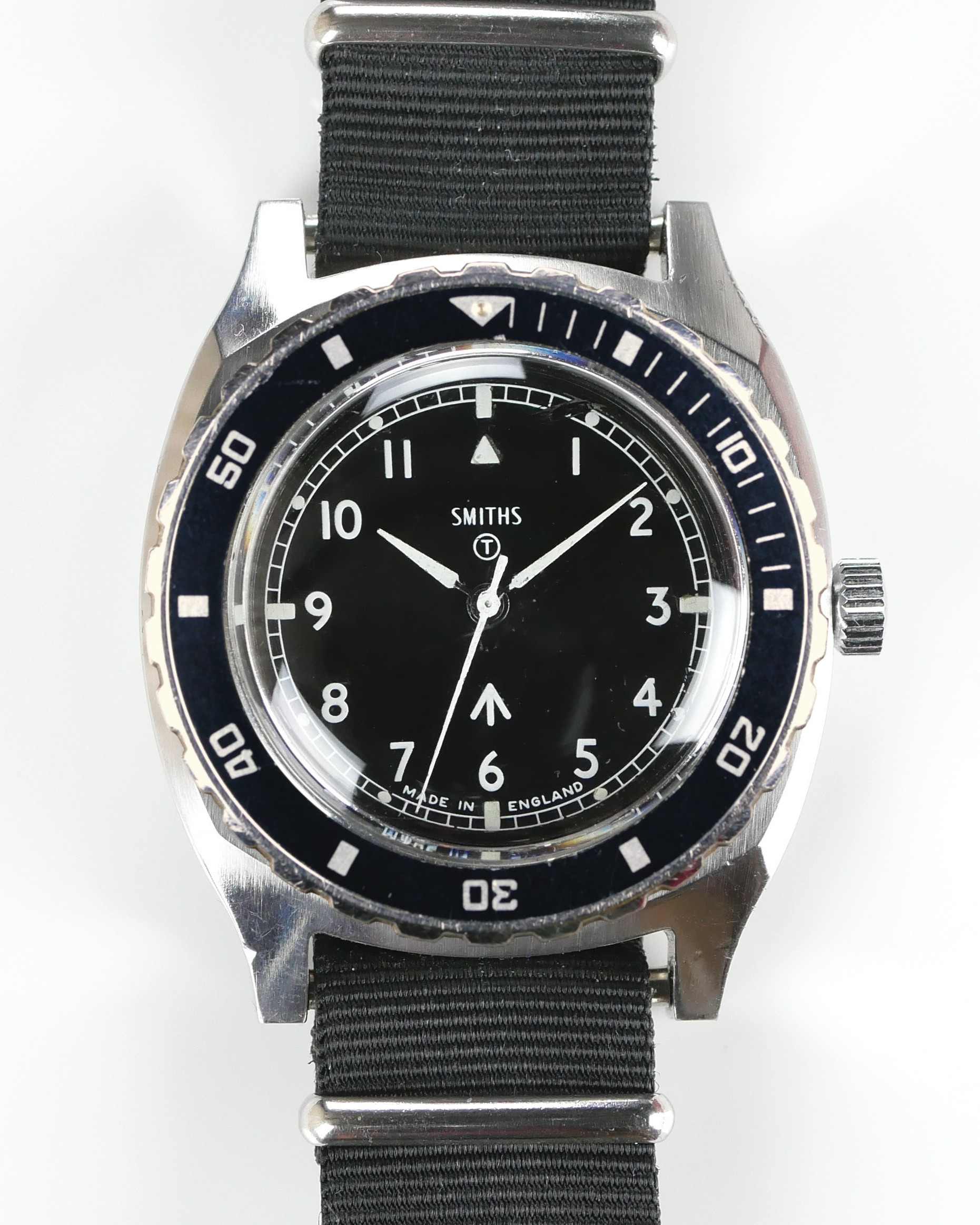
The case may have been later modified to accommodate an outer rotating bezel. An image illustrating how the watch may have looked with a period bezel can be seen below.
Fingerprints of Experimentation
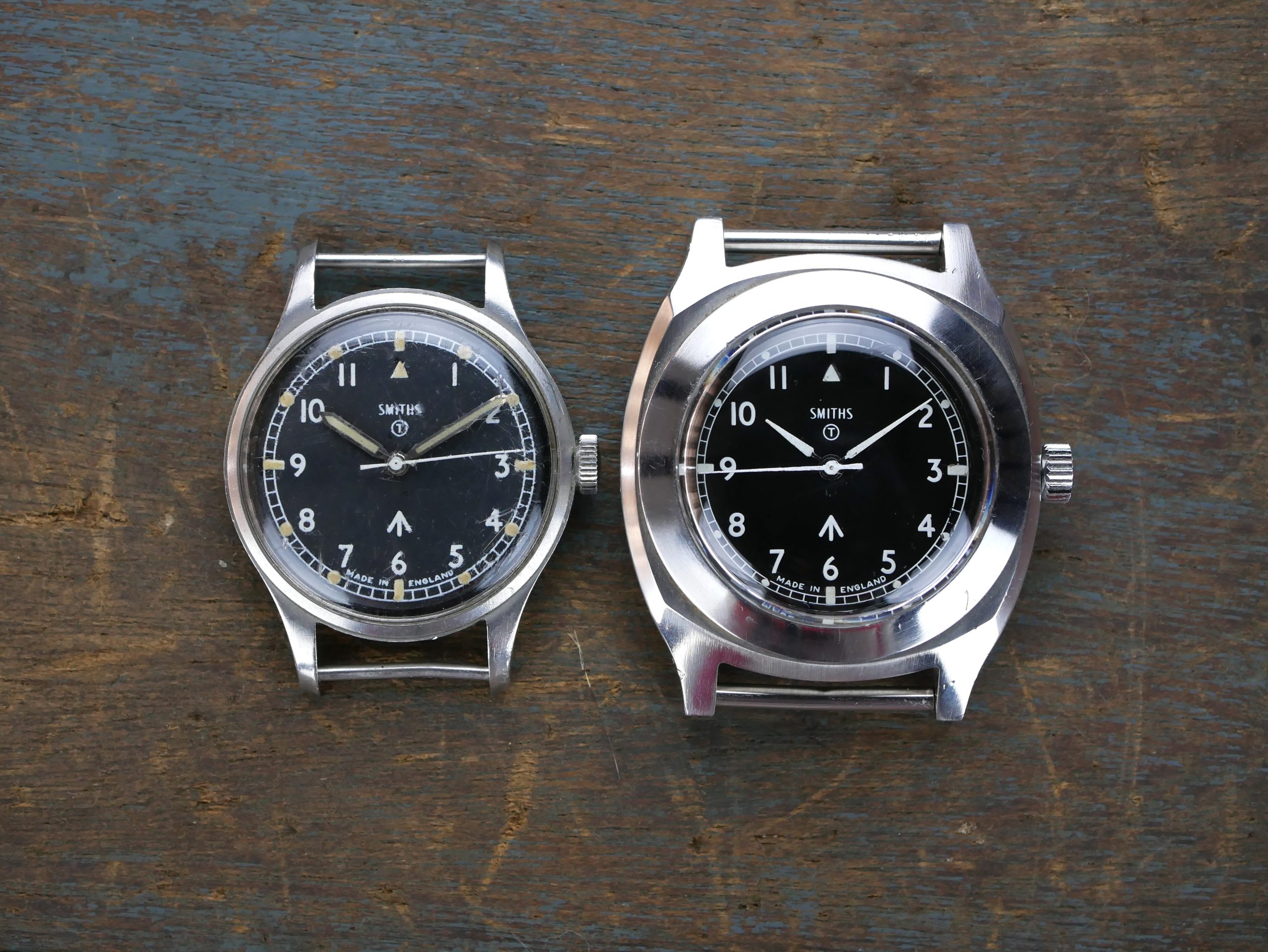
The dial immediately distinguishes itself from a standard production Smiths W10 (6645-99-961-4045) example from the late 1960s.
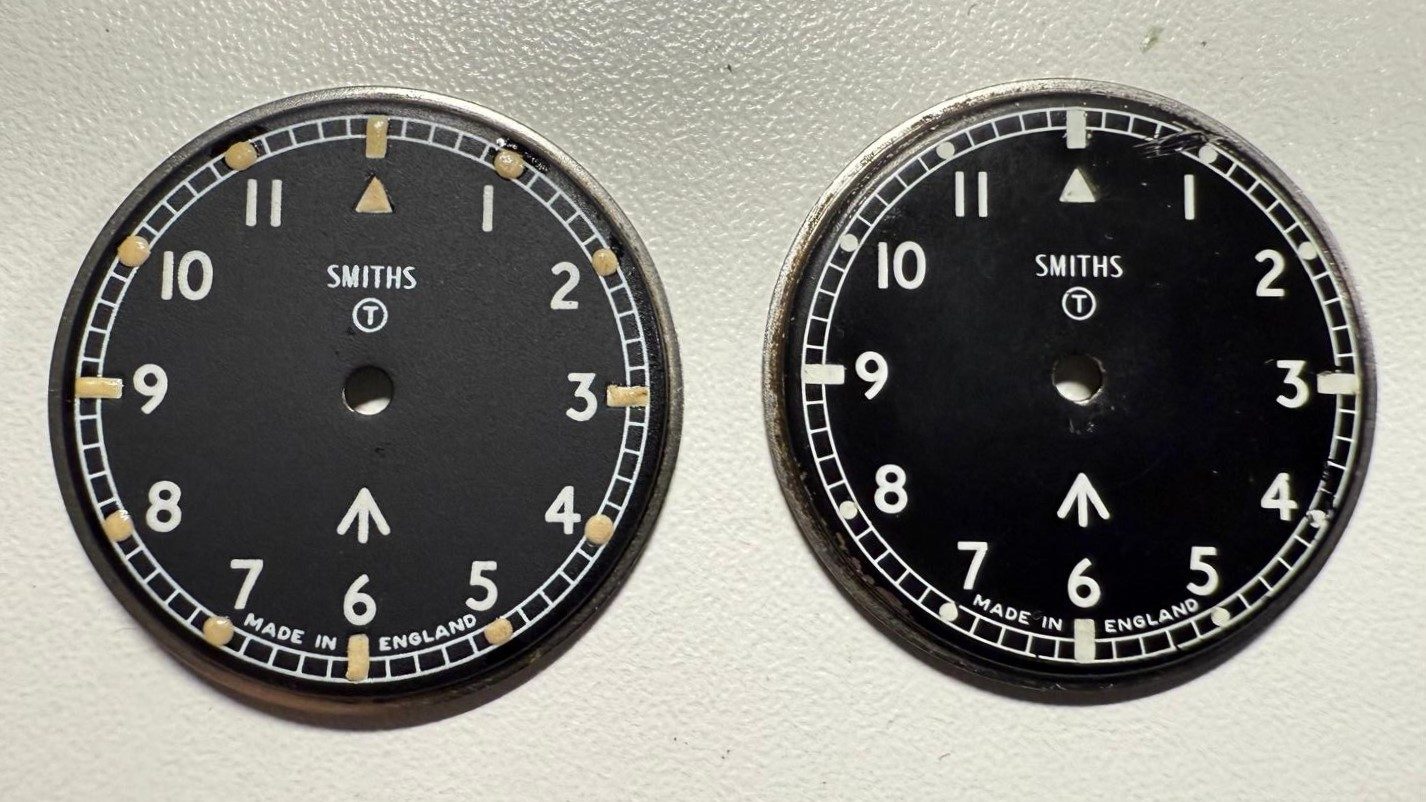
When comparing the dial side-by-side against a typical W10 dial, it is evident its main surface has a more distinctive jet-black finish with a sheen.
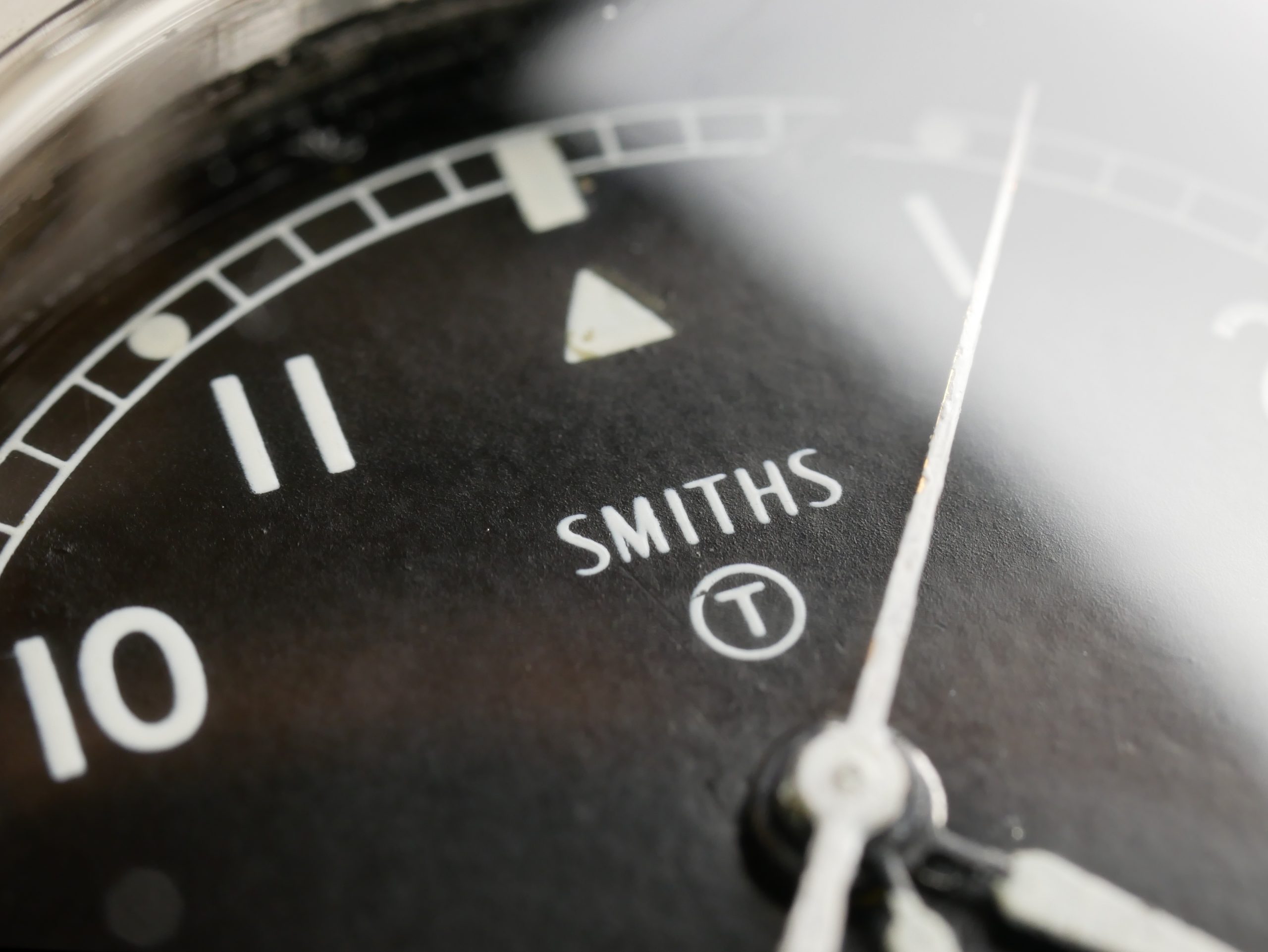
Furthermore, the markings appear more raised and thickly painted with a gloss-like veneer.
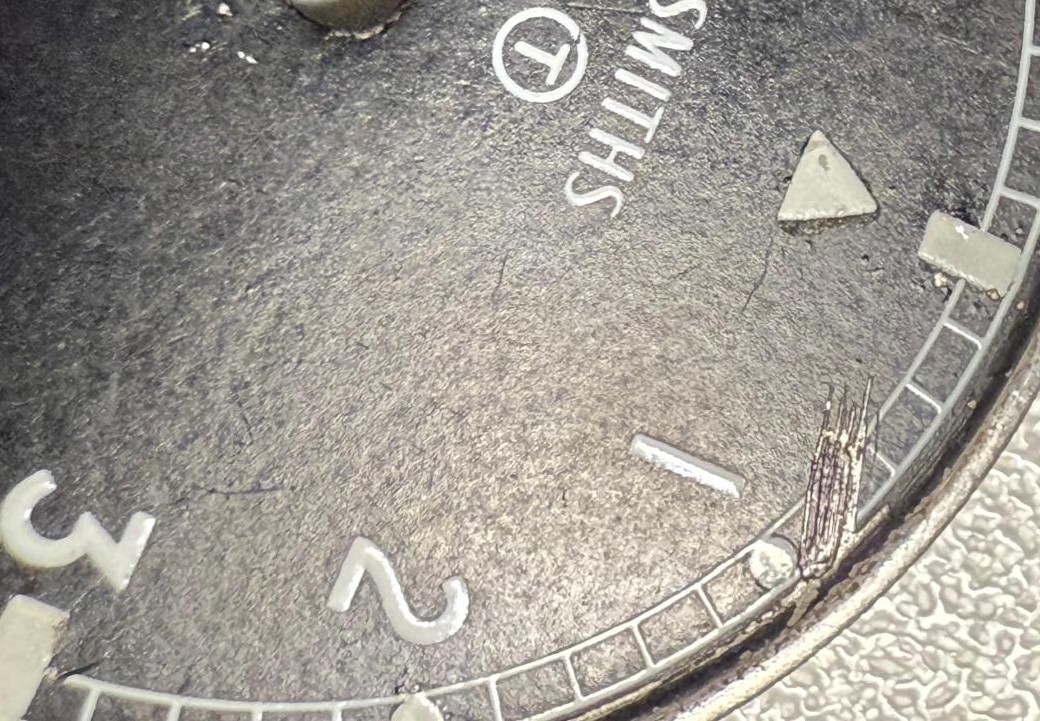
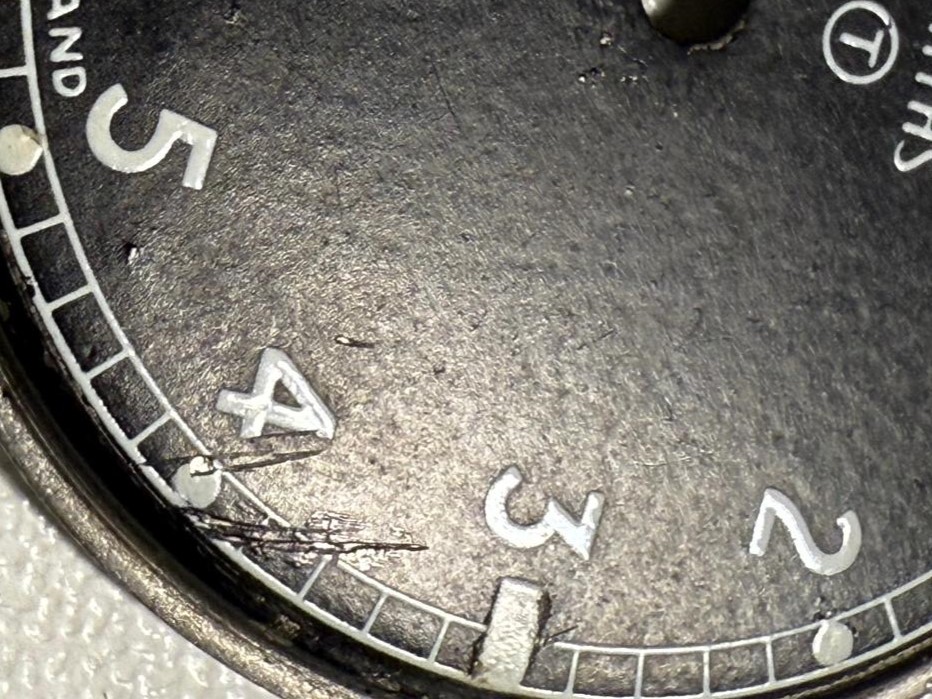
Earlier Smiths De Luxe GS dials, as well as later Smiths W10 examples, commonly exhibit flatter, more diluted and slightly cruder print markings with a lightly textured bubble appearance.
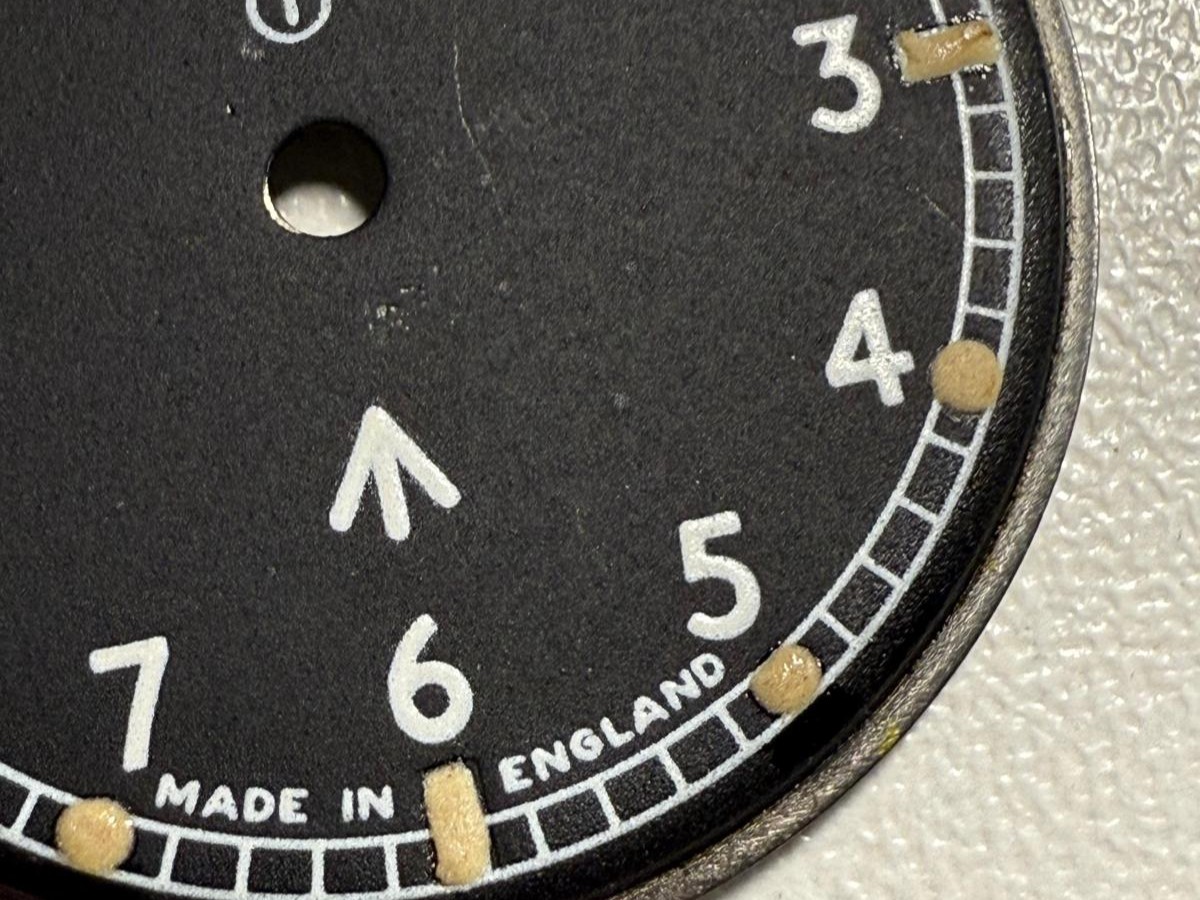
The dial appears to be made of soft iron or mu-metal, both of which offer high magnetic permeability. Measurement reveals it to be approximately 0.11mm thicker than a standard W10 dial, which is a meaningful difference.
Collectively, these idiosyncrasies strongly support the conclusion that the dial has been created and finished using a different process to that of a standard Smiths W10 dial.
It is possible the markings were screen printed or applied by hand with the use of a stencil. This contrasts with the mass-produced pad-printed Smiths W10 dials.
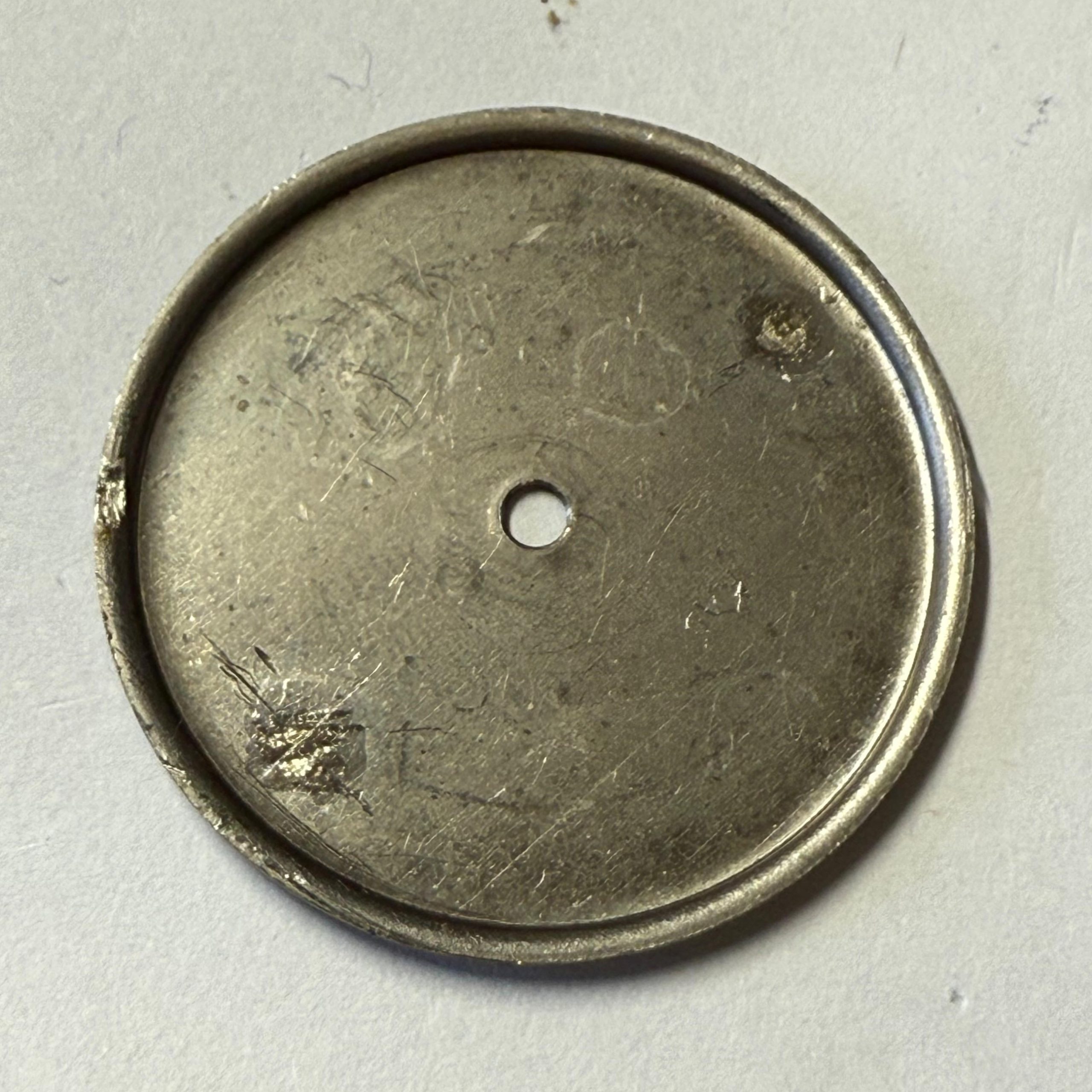
On the reverse, no dial feet are present. Instead, crude scratch marks are visible upon which an epoxy-like adhesive has been added to secure the dial to the movement. This method of attachment is highly unconventional and points clearly toward prototype status, where components are often assembled expediently during testing.
The alpha-style hour and minute hands, likely chemically blued-brass, are consistent with some Smiths civilian watches from the 1950s and 1960s. It is possible the hands were fitted temporarily for use during the initial evaluation stage and were not intended to be part of the final design. The second hand has obviously been replaced since the watch was featured in Konrad Knirim’s book in 2009.
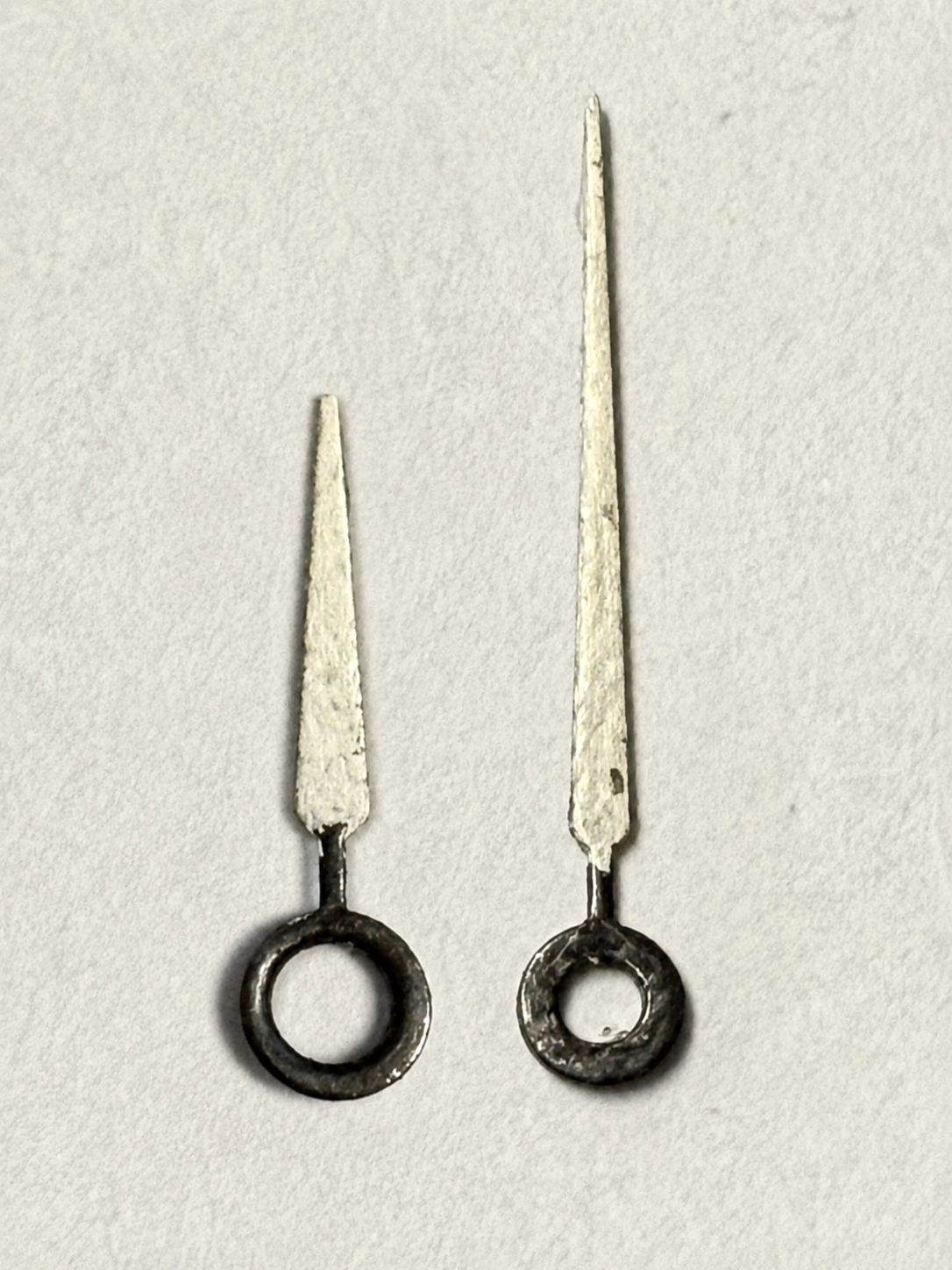
Perhaps most tellingly, the watch contains no luminous material whatsoever. This is despite the presence of the encircled ‘T’ on the dial, which should denote the application of tritium luminous material. Instead, the hands and luminous markers on the dial are coated with an off-white paint-like substance that shows noticeable age and wear. This same anomaly has been observed on the rare Smiths Navigator from the early 1950s and is a strong indication that the watch is an experimental piece.
A Transitional Movement
The watch is powered by the high-grade Smiths Astral 17-jewel calibre 60464E movement stamped ‘34’, dating it to March 1964. The reverse is marked ‘C60464E’ and features a flat plain steel hairspring with KIF Parechoc shock protection.
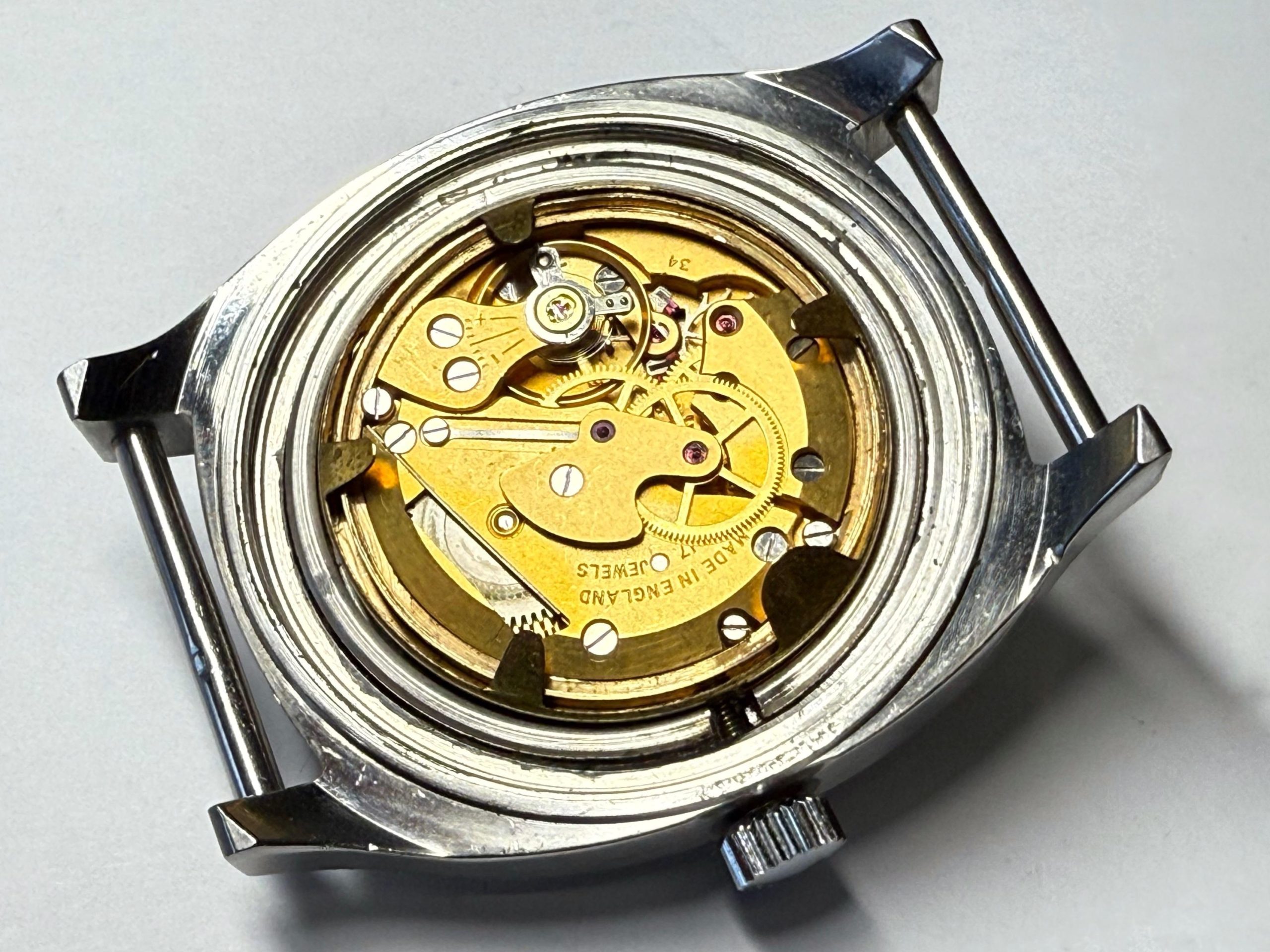
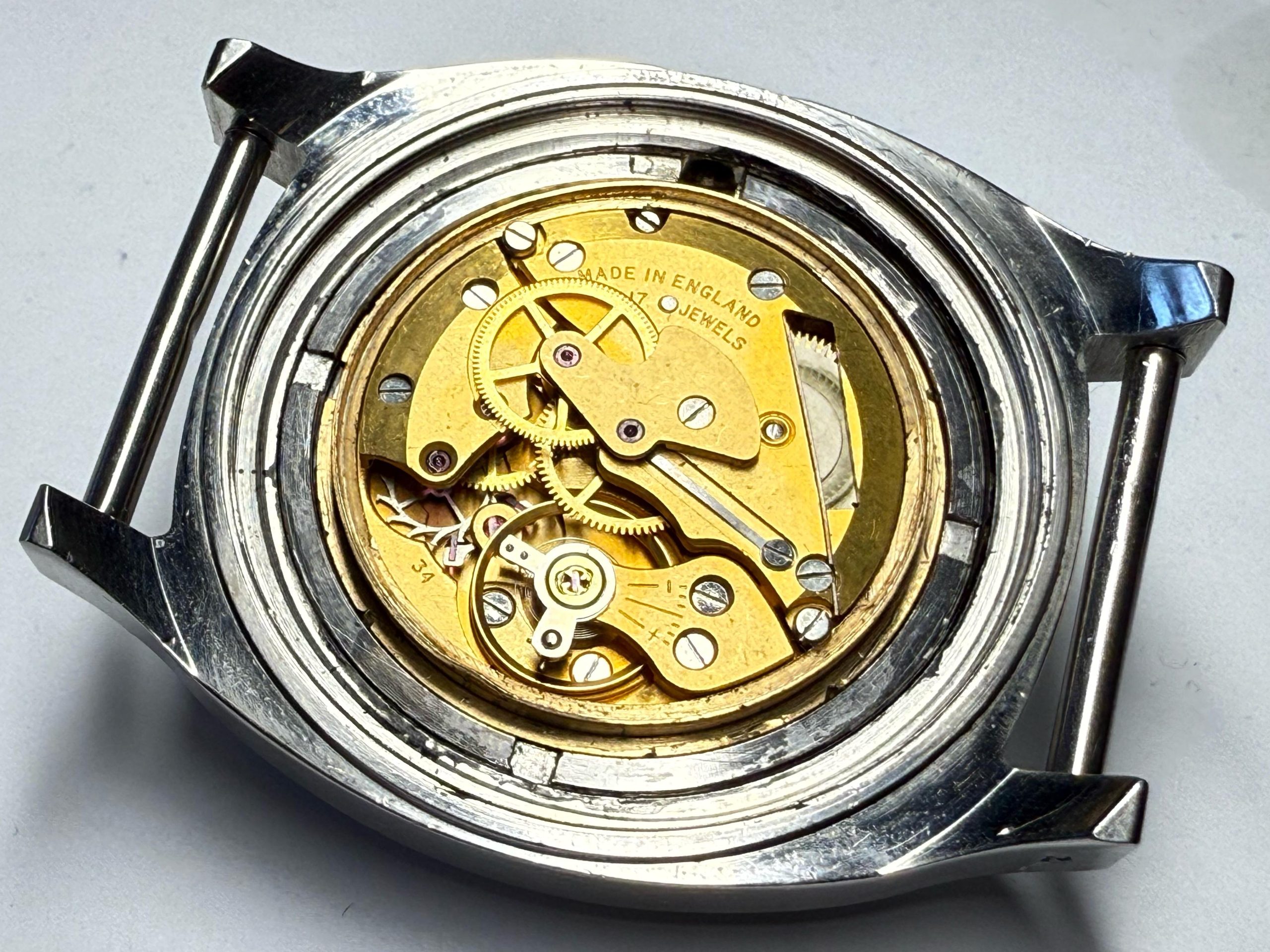
The slimline non-hacking 60464E was a successor to the 27.CS movement found in the Smiths De Luxe GS. It is believed this movement was first introduced in 1964 and was essentially the precursor to the militarised 60466E calibre with hacking mechanism found in the Smiths W10 wristwatches from the late 1960s.
The Astral slimline movement was the last ébauche to be designed in-house by Smiths.
To date, we have only observed one other possible 60464E movement that predates March 1964. This suggests the watch’s movement is one of the first to have been produced. The earlier movement, dating to December 1963, was found in another interesting Smiths that will be mentioned again later in more detail.
Deciphering the Markings
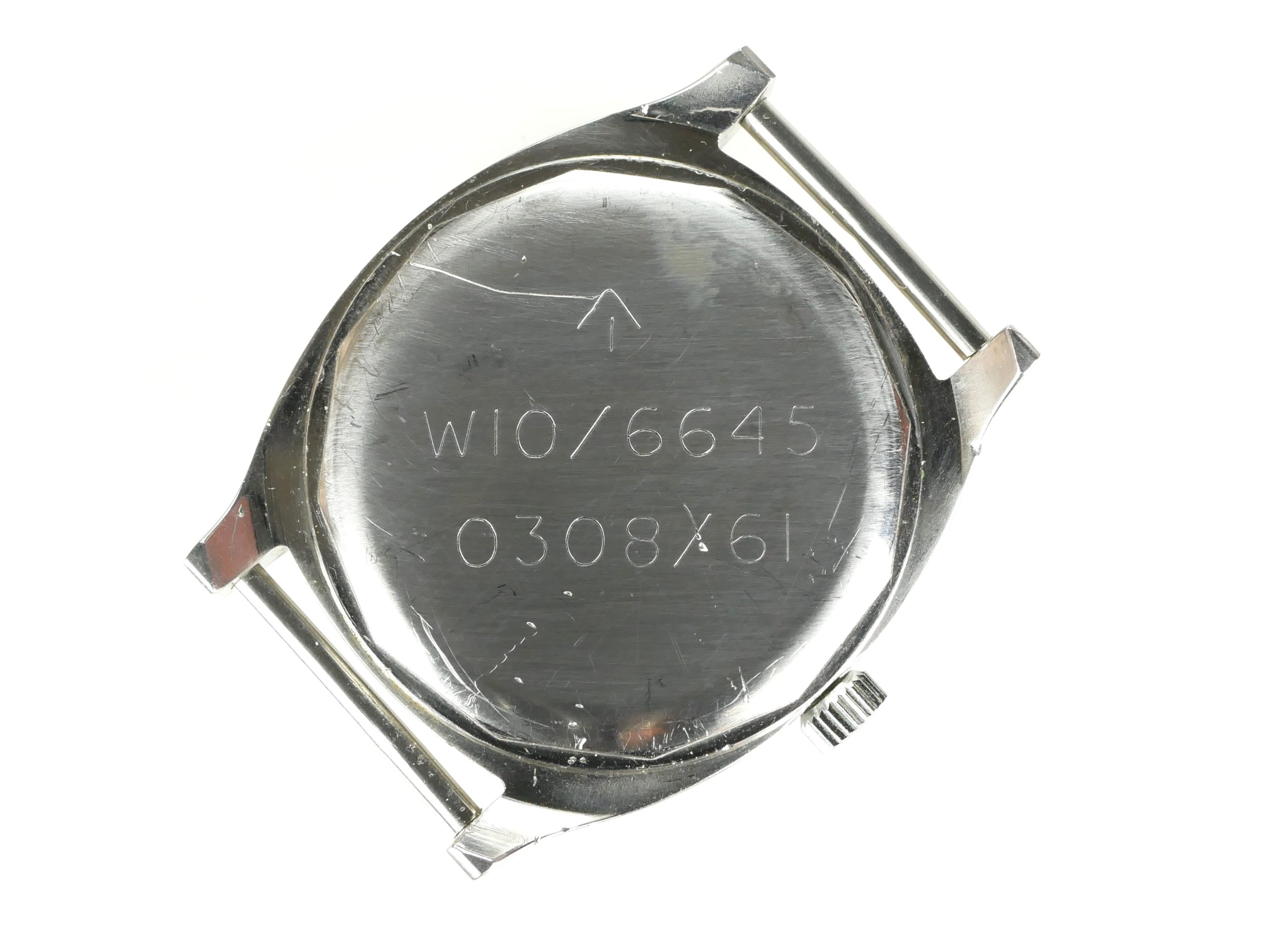
Despite their initial crude and unconventional appearance, the military markings on the reverse of the case back are typical and consistent with other MoD markings from the early 1960s. In assessing them, it is important to consider the broader range of military wristwatches issued during the period, rather than solely focusing on those produced by Smiths.
The markings follow the same pattern as other British military-issued wristwatches from the 1960s. The broad arrow is at the top, followed by its designation (W10) and partial NATO reference (6645), and below that is its individual serial number ‘0308’ with year, ‘61’.
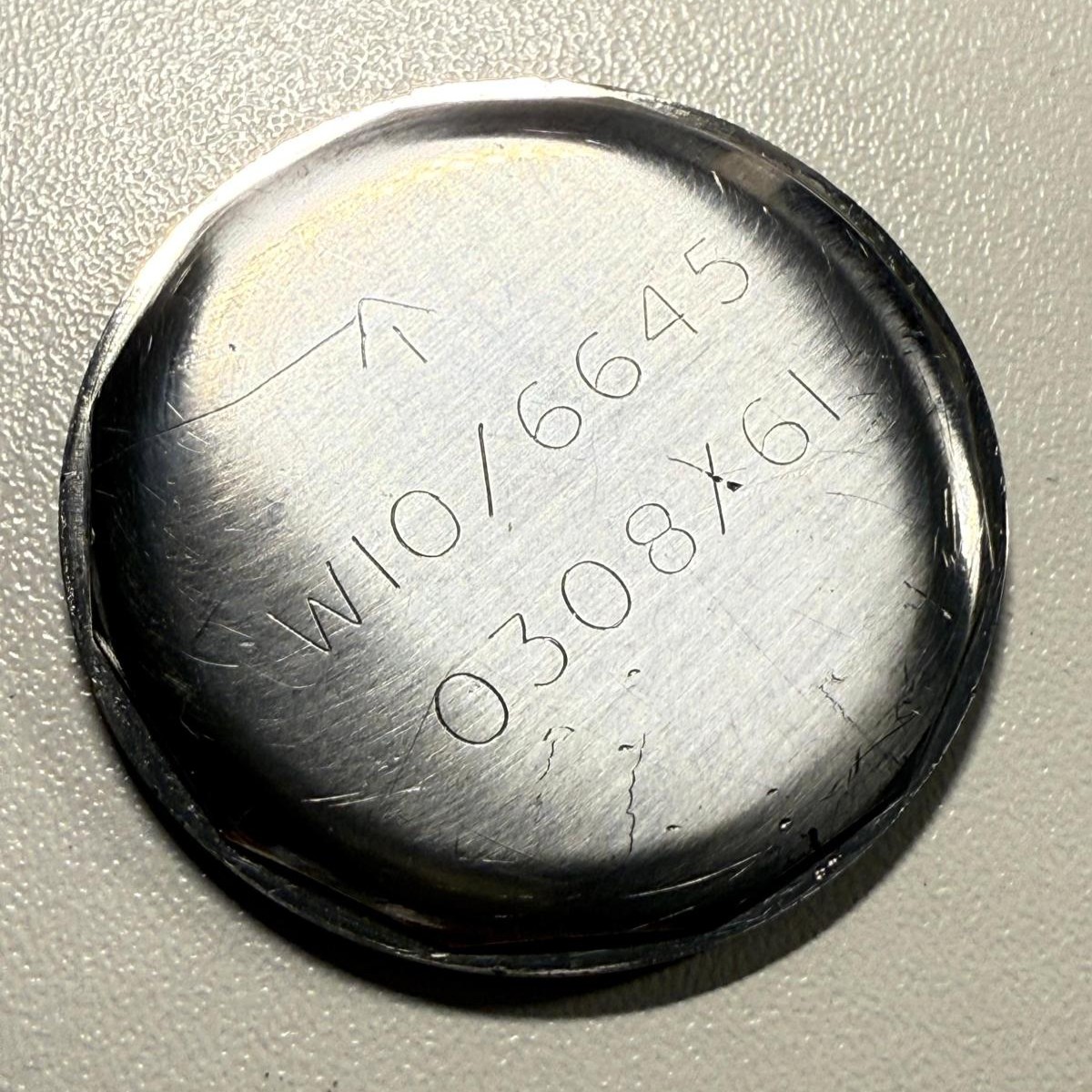
Two good examples of other such markings in the same format from the period can be found on the Omega Seamaster 300 W10 British military diver c1967 and Lemania Dive Supervisor c1965.
The watch’s serial number would seem to fall in the middle of a known batch of Smiths De Luxe military wristwatches issued to the Royal Australian Air Force in 1961, which may or may not be relevant. Note the seemingly superfluous “0” in front of the ‘308’ serial number. This feature is regularly observed on later Smiths W10s and appears less common on watches from other manufacturers.
The markings have been etched rather than engraved using a pantograph machine or stencil, which is entirely what one would expect on a working prototype. Examples of similar MoD markings have been noted on other watches from the same period. Two such examples are the rare Lemania Royal Navy ‘Non-Lume’ Chronograph c1964 and Lemania Dive Supervisor c1968. The ‘3’ in the thinly etched ‘3312’ on the Lemania ‘Non-Lume’, obviously added later, is particularly compelling.
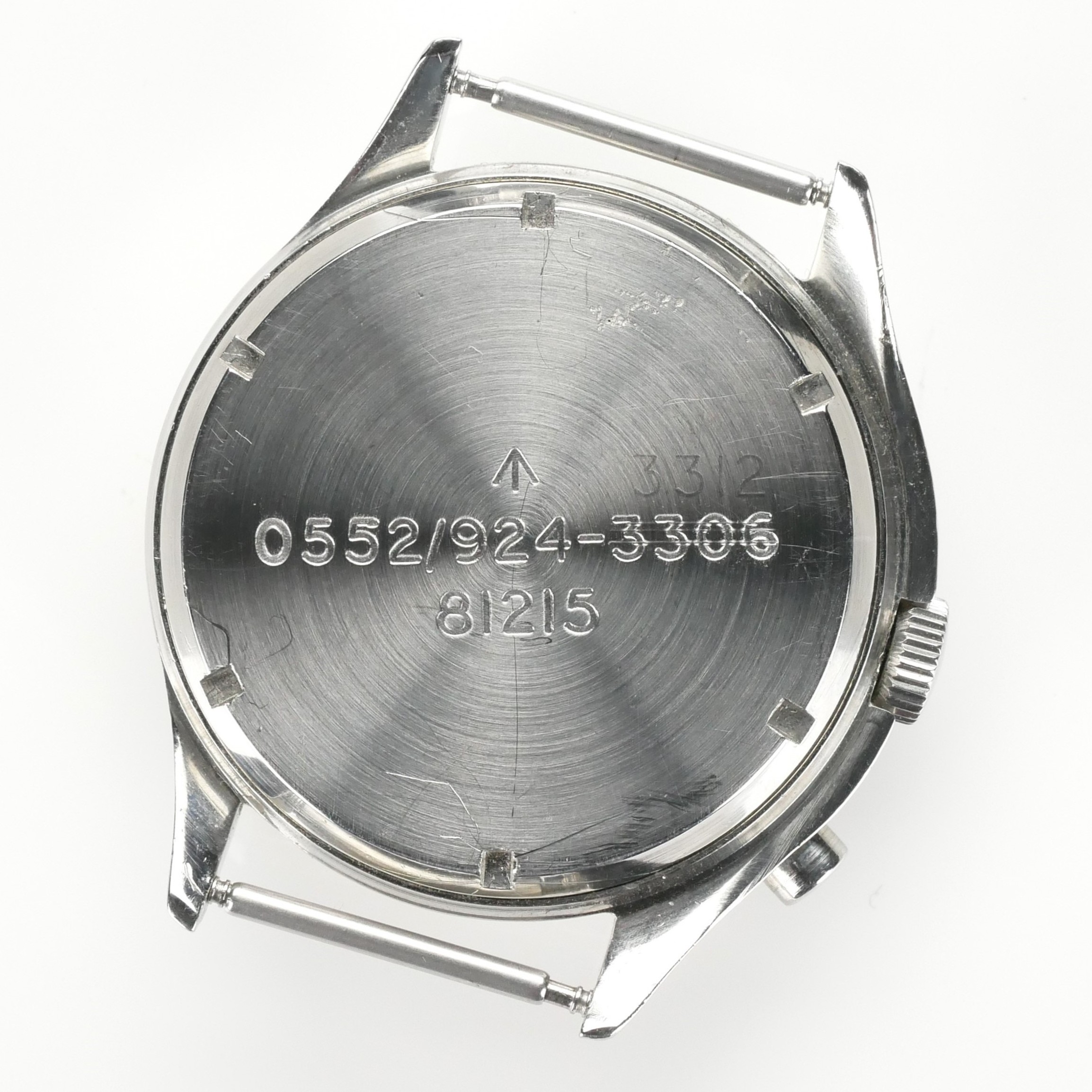
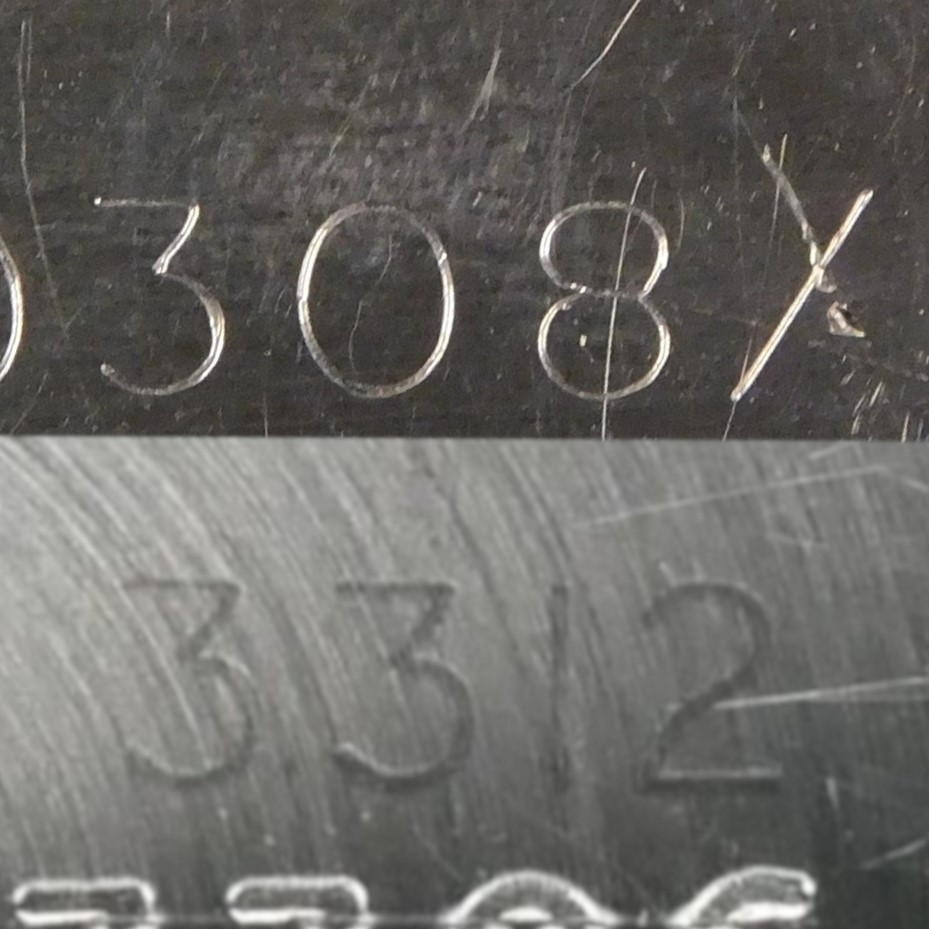
For completeness, the numbers from these and other examples have been digitally superimposed onto an image of the corresponding markings on the watch, and a near perfect match was observed throughout.
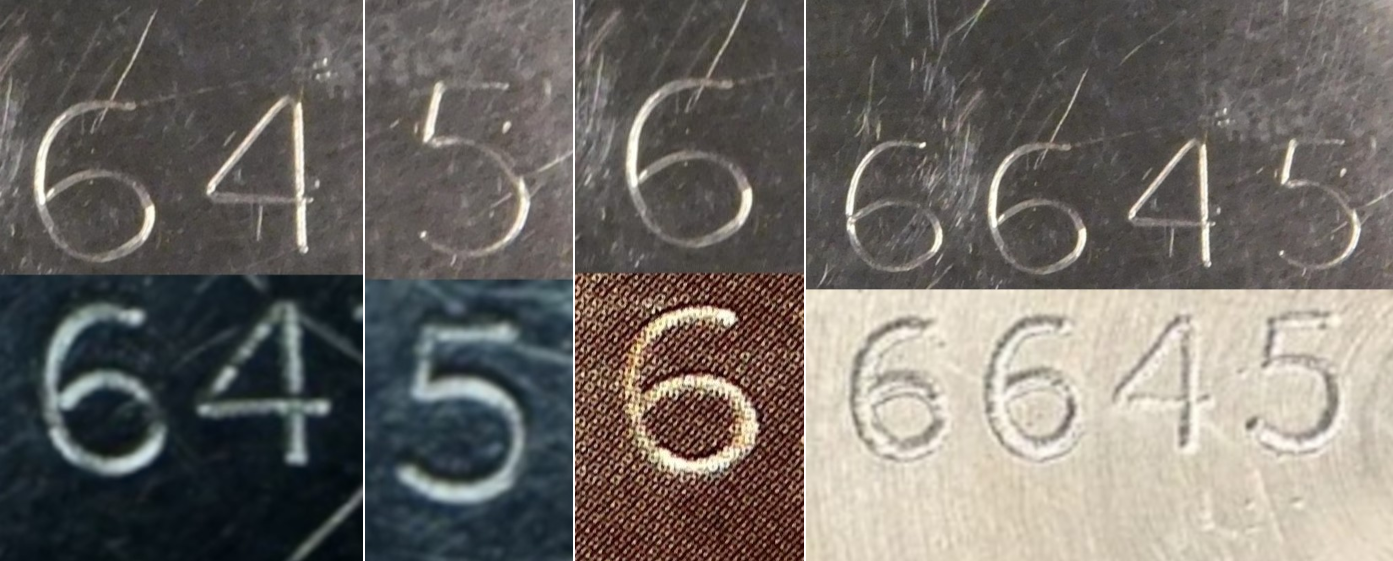
The thin larger-than-usual case back markings are proportionate to the size of the watch, which at first glance makes them appear somewhat peculiar. Naturally, the considerably smaller ‘3312’ markings on the Lemania have had to be magnified to the same size, making the fact they match so perfectly even more persuasive.
The numbers on the reverse of the case back do not show the full and usual thirteen-digit NATO stock number. Again, this is precisely what you would expect on a working test piece. The first four digits correctly signify the general category, this being ‘6645’ (Time Measurement Instrument). There would then usually be a two-digit country code, this being ‘99’ for the UK. There would then normally be a further seven-digit number assigned to the specific item, this in the case of the Smiths W10 being ‘961-4045’ (General Service Wristwatch).
The absence of any country code and specific item reference would seem to provide yet further evidence that the watch is a test piece that is in its early stages of development. A working prototype is not likely to have complete or finalised markings.
Parallels with Other Prototypes
W10/0308 shares several distinct similarities with other known Smiths military prototypes.
In 2017, a collection of Smiths wristwatches and components surfaced at auction in Cheltenham, near the home of the former Smiths factory in Bishops Cleeve. Many are believed to have originated from the company’s Research & Development Department.
Among the lots was what appeared to be a prototype watch case for a Smiths De Luxe GS, which was observed to have a glued-in crystal as opposed to the usual screw-in-ring. The glass fitted to W10/0308 has also been left unfinished, being loose without any form of tension ring or other means to secure it to the case.
Also included within the parts sold at the Cheltenham auction was a rare Smiths De Luxe GS dial with white painted hour markers and hands, which may have originally been fitted to the De Luxe prototype case from the same sale.
The sale also included a 27.CS movement attached to a silvered dial with a pair of white painted GS hands. A handwritten label was attached to the movement that suggests it was being tested and evaluated.
As previously mentioned, the Smiths Navigator from the early 1950s displays the same application of white paint on the hands and luminous markers.
A rare and untouched Smiths SS4 (NA/GS/0020) was discovered in 2008. It was found with the same application of adhesive resin on several of its parts, most notably on the reverse of the dial to secure it to the movement. The movement is also stamped ‘34’ (March 1964) and looks to be a calibre 60464E. The balance cock was noted as being from an earlier 27.CS movement.
At least two other Smiths SS4s have been found with the same 60464E movement, both marked ‘46’, dating them to April 1966. Currently, the genesis of the SS4 watch and to whom it was issued has yet to be established.
Another unusual Smiths military timepiece, discovered in 2018, shares the same movement as W10/0308. The watch has the initial appearance of a Smiths De Luxe GS from the mid-1950s. However, the case back is marked ‘W10/6645-99-910-1000’ and ‘S.13’. Its movement is stamped ‘124’, dating it to December 1964, and appears to feature the same calibre 60464E non-hacking movement.
The Smiths S.13 came from the family of a retired MoD watchmaker, which helps to confirm it to be a wholly legitimate and genuine piece.
A watch virtually identical to the Smiths W10 S.13, numbered ‘S.16’, surfaced in 2025. This watch features the same Smiths De Luxe GS dial but is fitted with a later 60466E movement.
The dials on the S.13 and S.16 have been refinished over dials that previously featured a luminous triangle at 12 o’clock. Bizarrely, this indicates the original dial design that has been covered over post-dates the refinished dial. The dial design changed from a ‘12’ marker to a luminous triangle in 1959 under the adapted British Inter-Service GS wristwatch specification (DEF-3-A).
The SS4, S.13 and S.16 have the hallmarks of experimental timepieces, with the latter two being accepted as trial watches for the Smiths W10 (6645-99-961-4045). We suspect these watches were used to test the new slimline 60464E and later 60466E hacking movement.
The recurrence of the 60464E movement across other known military test pieces strongly supports the notion that it was used extensively during Smiths’ early-1960s military development programme.
Finally, at least three Smiths 6B/9614045 wristwatches have been noted with unorthodox case back markings. The Smiths 6B was issued to the RAF and only around 1,250 examples are thought to have been issued over two years, 1,000 in 1967 and 250 in 1968.
The markings are extremely unusual for a Smiths and instead match the more standardised style and format found on other British military-issued wristwatches from the 1960s.
The markings on these watches follow the same pattern as those featured on W10/0308. The broad arrow is at the top, followed by its designation (6B) and NATO reference (9614045), and below its serial number and year of issue. One of the three known examples with serial number ‘631’ features an early 60466E movement that dates to June 1966 and is fitted with a balance cock from an earlier 27.CS.
The irregular case back markings, early movement and swapped balance cock suggest the watch is an experimental test piece.
Taken together, these watches reveal a consistent pattern among experimental Smiths military timepieces from the early 1960s, which frequently combine transitional movements, unconventional dial finishing, and non-standard assembly methods.
Rewriting the History of Smiths
After careful consideration of all the available evidence, it would seem entirely appropriate to consider the Smiths W10/0308 to be an extraordinarily special and historically important timepiece.
Renowned Smiths historian, Barry M Jones, has reviewed the watch and considers it to be a genuine working prototype. He had known of its existence prior to its sale in 2025 and included it in his book, S Smith & Sons Ltd, The Golden Years, which was first published in 2013.
Barry believes the ‘61’ on the case back may represent the year Smiths were awarded the contract to produce the watch, rather than its year of issue. This provides a plausible explanation for the apparent discrepancy between the case and movement dates.
The watch may have begun development in the late 1950s with the earlier De Luxe 27.CS movement and was later retrofitted with the new Astral slimline 60464E, with the dial being updated and replaced at the same time.
Expert horologist, Simon Freese, has also closely examined the watch and believes it to possess all the hallmarks of an experimental test piece. Another respected horologist and fellow BWCMG member has inspected it and has made the same assessment.
But why was W10/0308 made and what could have been its intended purpose?
According to the markings on the reverse of the case back, the watch was assigned to the British Army (W10) in the early 1960s.
Due to its size, design, and construction, it would seem entirely logical to presume W10/0308 was devised by Smiths as a military diver wristwatch.
Following the abandonment of the highly radiant Blancpain W10 diver of the 1950s, the MoD would have been keen for Smiths to develop their own in-house replacement.
Smiths working on such a project should come as no surprise. After all, they have previous form in such endeavours. Their failed attempt to produce Mk. VII wristwatches for the Air Ministry during WWII and their abandoned Navigator from the early 1950s are two such examples. They had also been supplying the MoD with their De Luxe GS wristwatch since the mid-1950s and were heavily subsidised by the UK government by the early 1960s.
Due to the heightened threat from Russia and the fear of another war on the horizon, the MoD were concerned about the reliance on overseas supply of wristwatches, which had been an issue during WWII. They would have, therefore, looked to Smiths to develop and produce the watches they required.
We know the Swiss brand Lemania were ultimately awarded the MoD contract to produce the rare Dive Supervisor (DS) wristwatch in 1964, with Omega and Rolex supplying divers’ wristwatches around the same time. This was presumably, albeit partially, due to Smiths being unable to successfully progress the development of their own military dive watch.
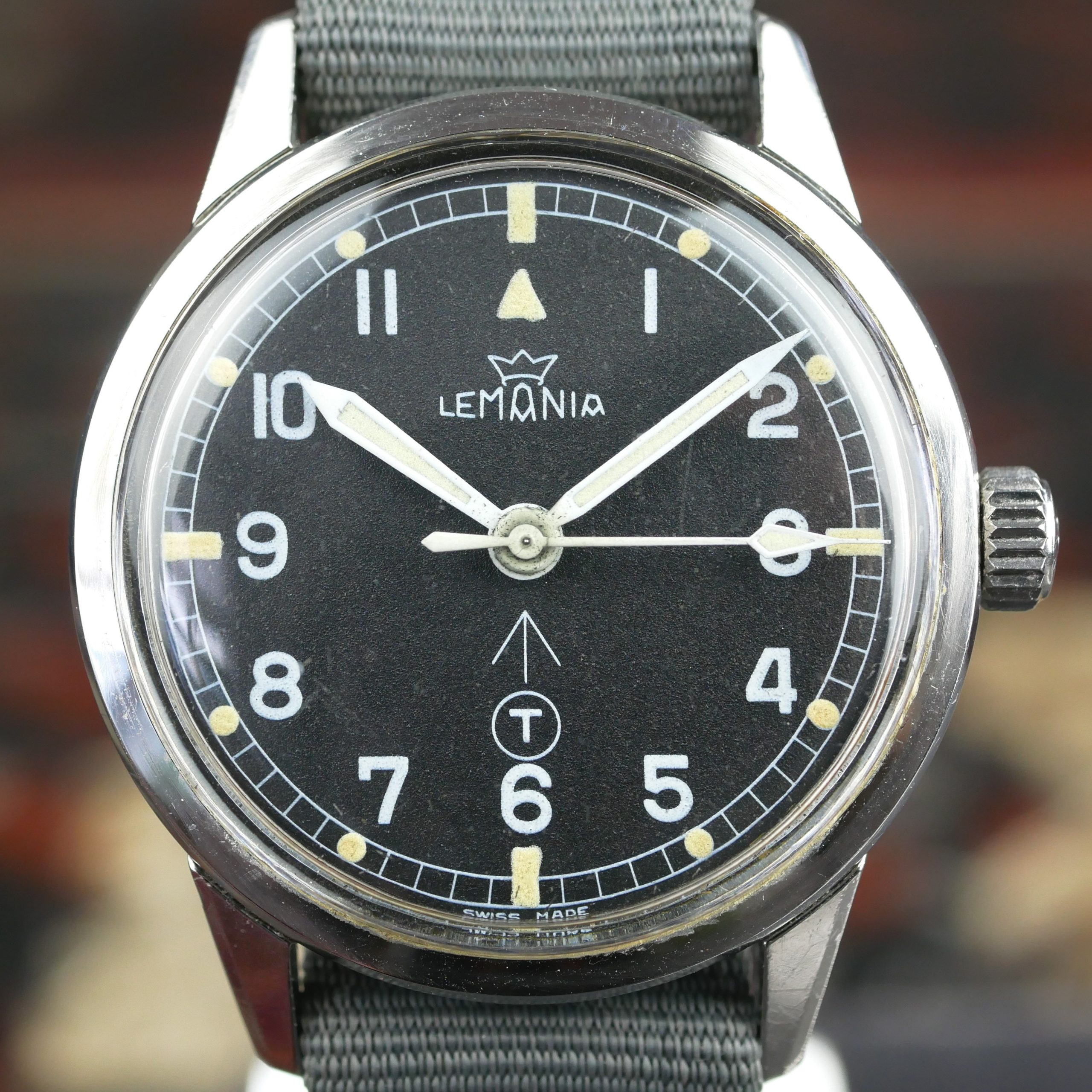
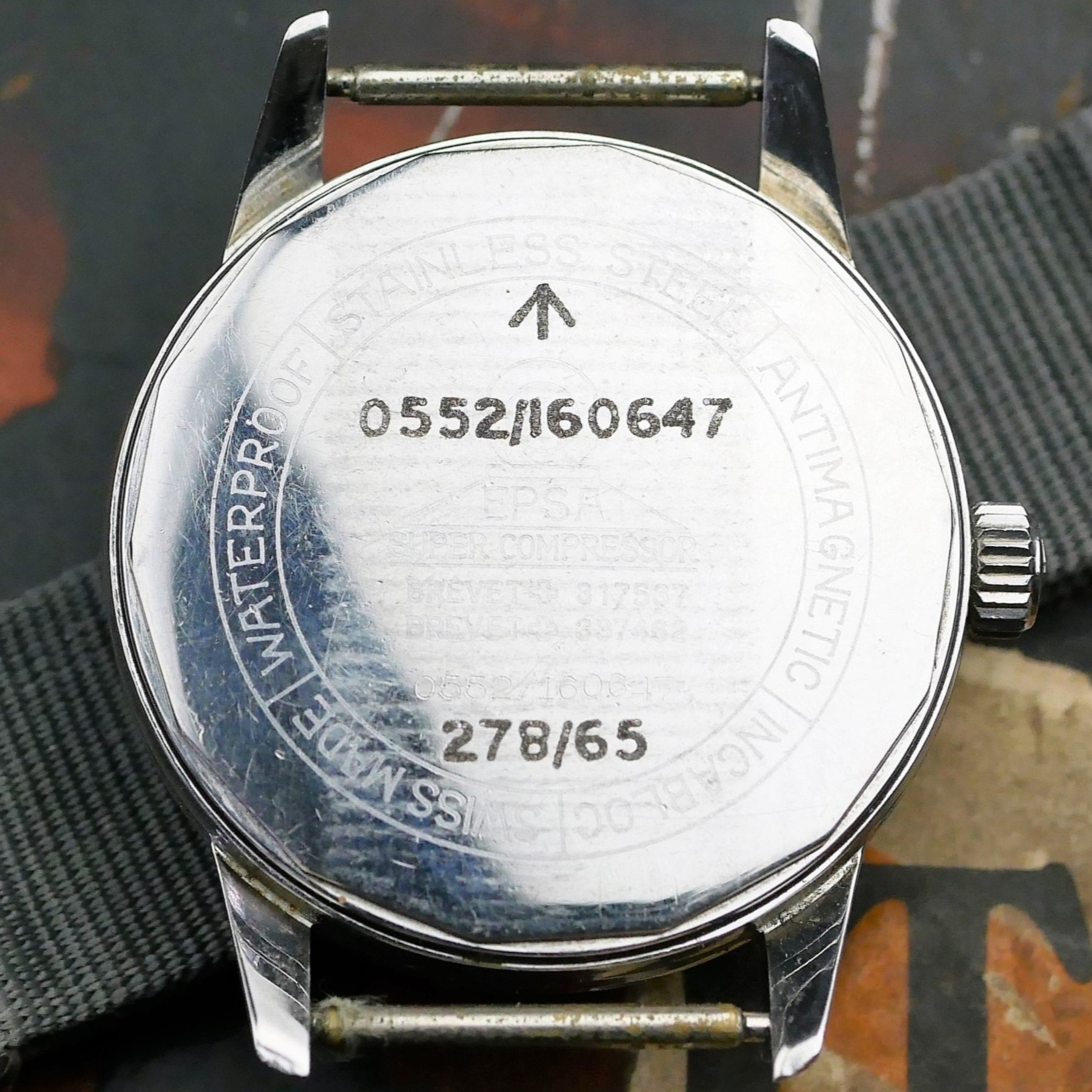
It is worth noting that due to the limited information available regarding this period, the now highly prized and coveted Lemania DS was previously considered to be a crude forgery. This is presumably why the Lemania DS was excluded from Konrad Knirim’s book in 2009.
An important point to consider when evaluating W10/0308 as a dive wristwatch is the absence of the six radial key slots on the case back, which are outlined in the MoD specification for a General Service Wristwatch in DEF-3-A dated 20 October 1959. Instead, it features a plain multi-faceted case back, which is reminiscent of the Lemania DS. The encircled ‘T’ dial, spring bars, push-pull crown and military markings featured on the Lemania DS are also notable on W10/0308.
It should be remembered that the Dive Supervisor was to be used for supervision only and was merely required to be ‘splashproof’ and not pressure resistant.
In April 2025, this coincidentally being the same time W10/0308 was sold, Jonathan Hughes published an article on his website, CWC Addict, which provides some new and exciting information regarding the early development of British military dive watches.
The article, ‘Dive Watches and the A.E.D.U.’, aims to establish further information regarding the Navy Department Experimental Diving Unit Specification SD 37, dated 12th May 1966. This specification was the predecessor to the Defence Standard for British military dive watches from August 1968 and applied to all branches of the military, including the British Army.
The remarkable documents discovered by Jonathan in the National Archives relate to the secret trials of diving equipment, including watches, undertaken by the Royal Navy’s Admiralty Experimental Diving Unit (A.E.D.U.) at the beginning of the 1960s. The papers had been declassified in the 1990s and had apparently not been reviewed by anyone until recently.
Importantly, these trials occurred at precisely the same time that W10/0308 is thought to have been manufactured in the early 1960s.
The first mention of wristwatches in the newly discovered papers was in May 1964, and the aim of the proposed work was ‘to rationalise and specify watches for use by divers’. It is perhaps worth mentioning again that the movement of W10/0308 dates to March 1964, which places its production perfectly around this time and suggests the watch may have been hastily assembled to participate in the trials.
The documents refer to a diving supervisor watch which was ‘supplied and tested… and has been recommended for service’. Intriguingly, the brand is not mentioned, and it has subsequently been assumed this watch is the Lemania DS issued in 1965. A further report in May 1965 suggests there was some concern surrounding watches becoming magnetised and it would take until May 1966 for the SD 37 specification to be finalised. It was then confirmed that: ‘It is expected to settle for a good quality diving watch without putting excessive emphasis on completely non-magnetic characteristics.’
Jonathan reasonably concludes that the A.E.D.U.’s trials may have proved decisive in the creation of the SD 37 specification in May 1966. The new information contained in the recently unearthed documents provide further credence that W10/0308 is a rare military prototype that served as a test model for a British military dive wristwatch in the early 1960s.
As a test piece initially conceived around 1961, and possibly adapted in 1964, it is plausible its dial is the earliest known example of the famous Smiths W10 variant and is one of the first to have been produced based on the MoD dial design outlined in DEF 66-4 (Part 4)/Issue 1 (1969). The subtle but undeniable differences of the dial markings and its finish compared to a typical W10 dial provide substantive weight in support of this conclusion.
Another watch which is perhaps worth mentioning in this regard is a highly unusual Smiths with date calendar that was sold by Harper Field Auctioneers (formerly Stroud Auctions) in 2021.
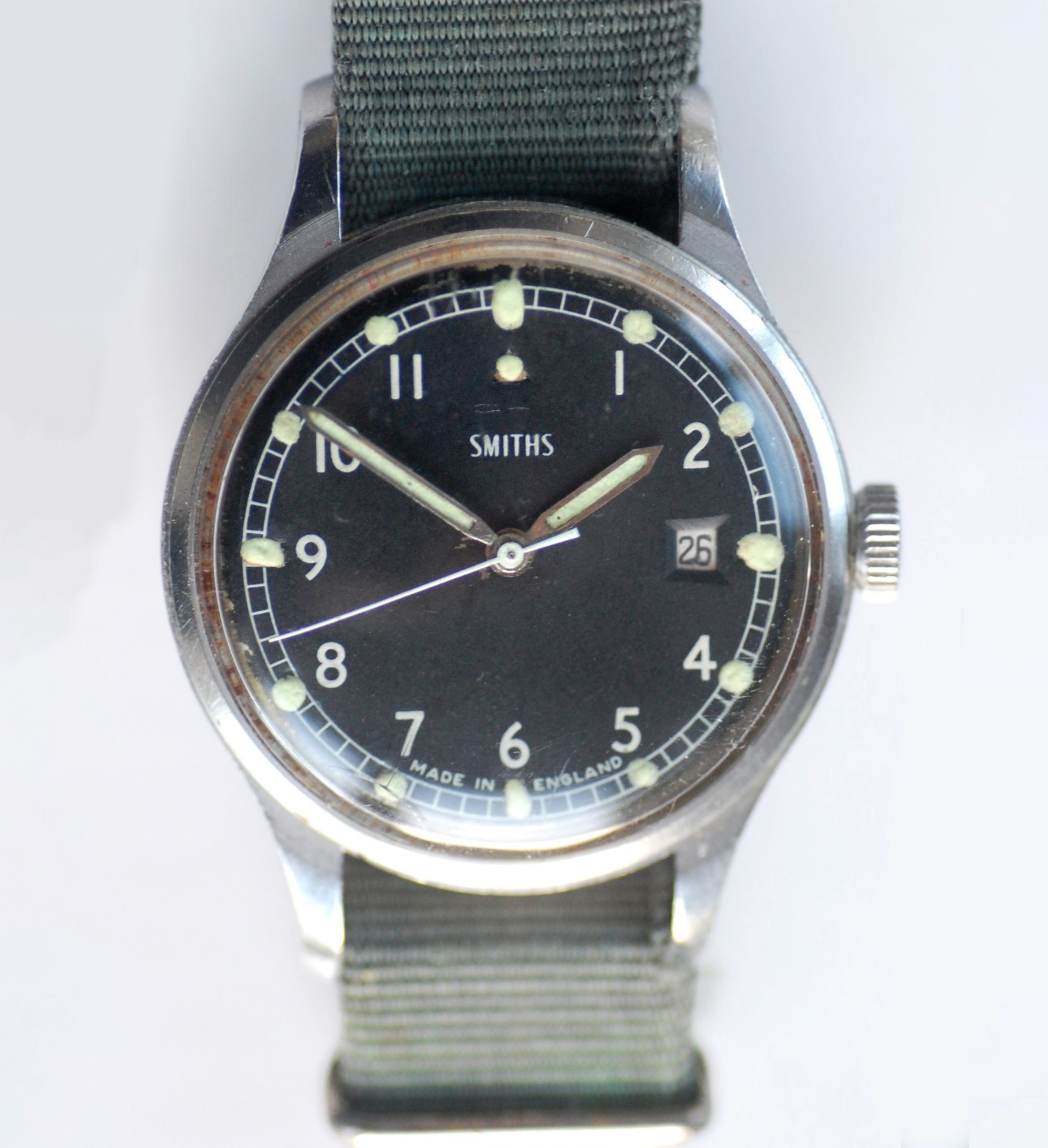
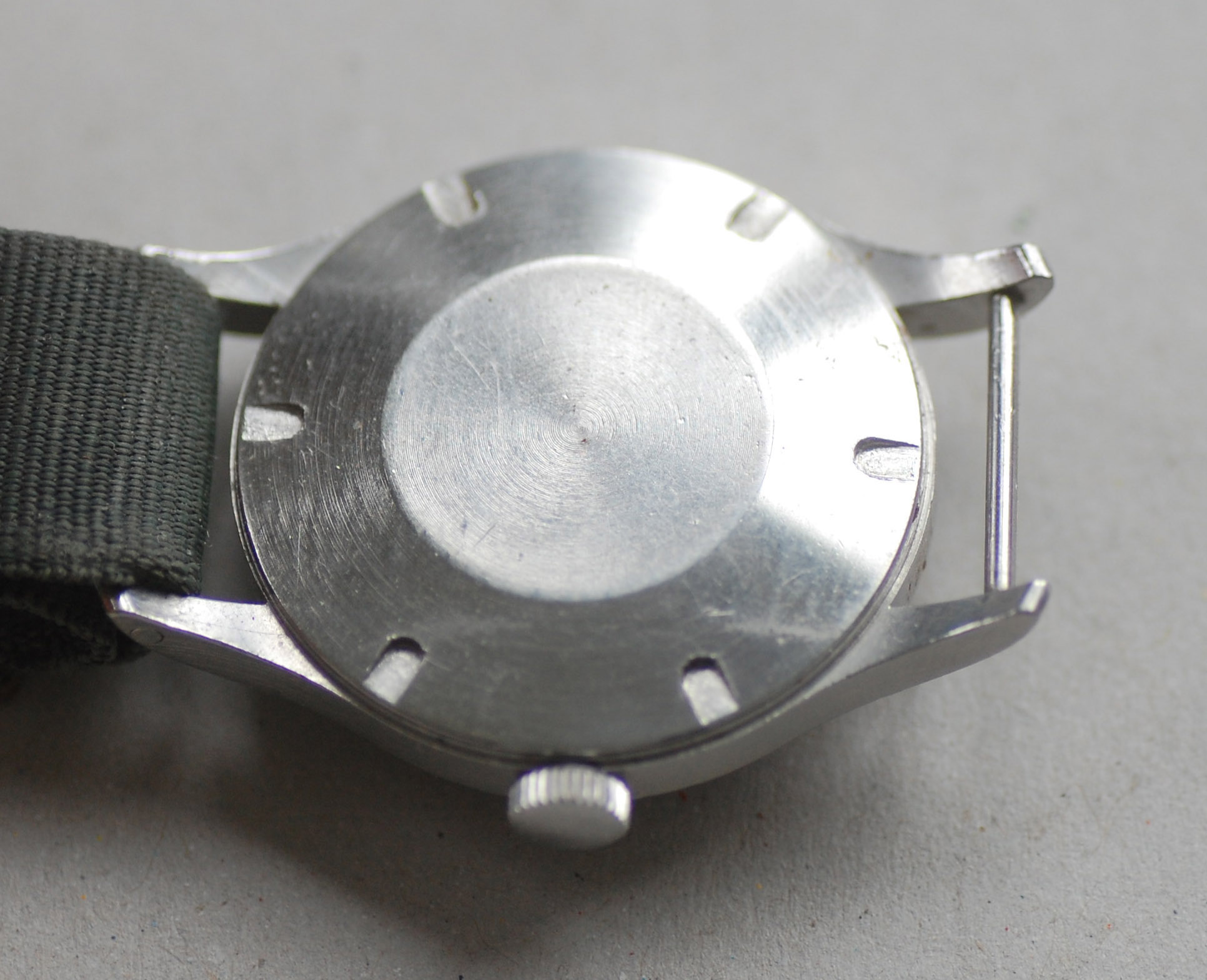
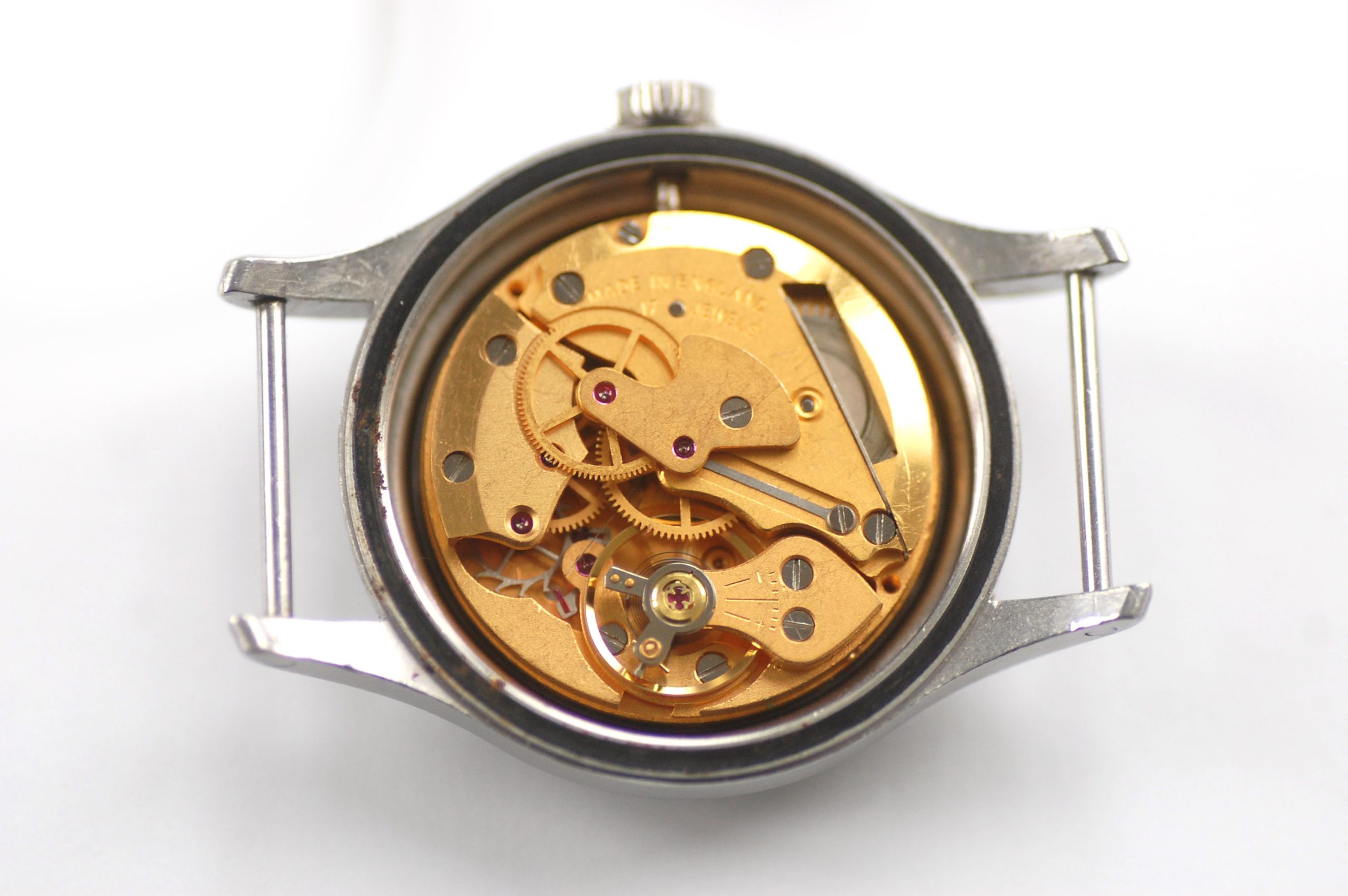
The watch features a sterile W10 case. The luminous dial and hands appear similar to a standard Smiths W10 example. However, the dial is absent of any military markings and includes a date window. The movement, presumably a 60465E with calendar date wheel, features no date or calibre code. This may indicate it was intended to be used in-house by Smiths. The watch came fitted to an early worn NATO strap.
Due to its presumed date of manufacture and the presence of a date window, it has been suggested the watch may have been a failed attempt by Smiths to produce the later DS wristwatch with date calendar that was again supplied by Lemania in 1968.
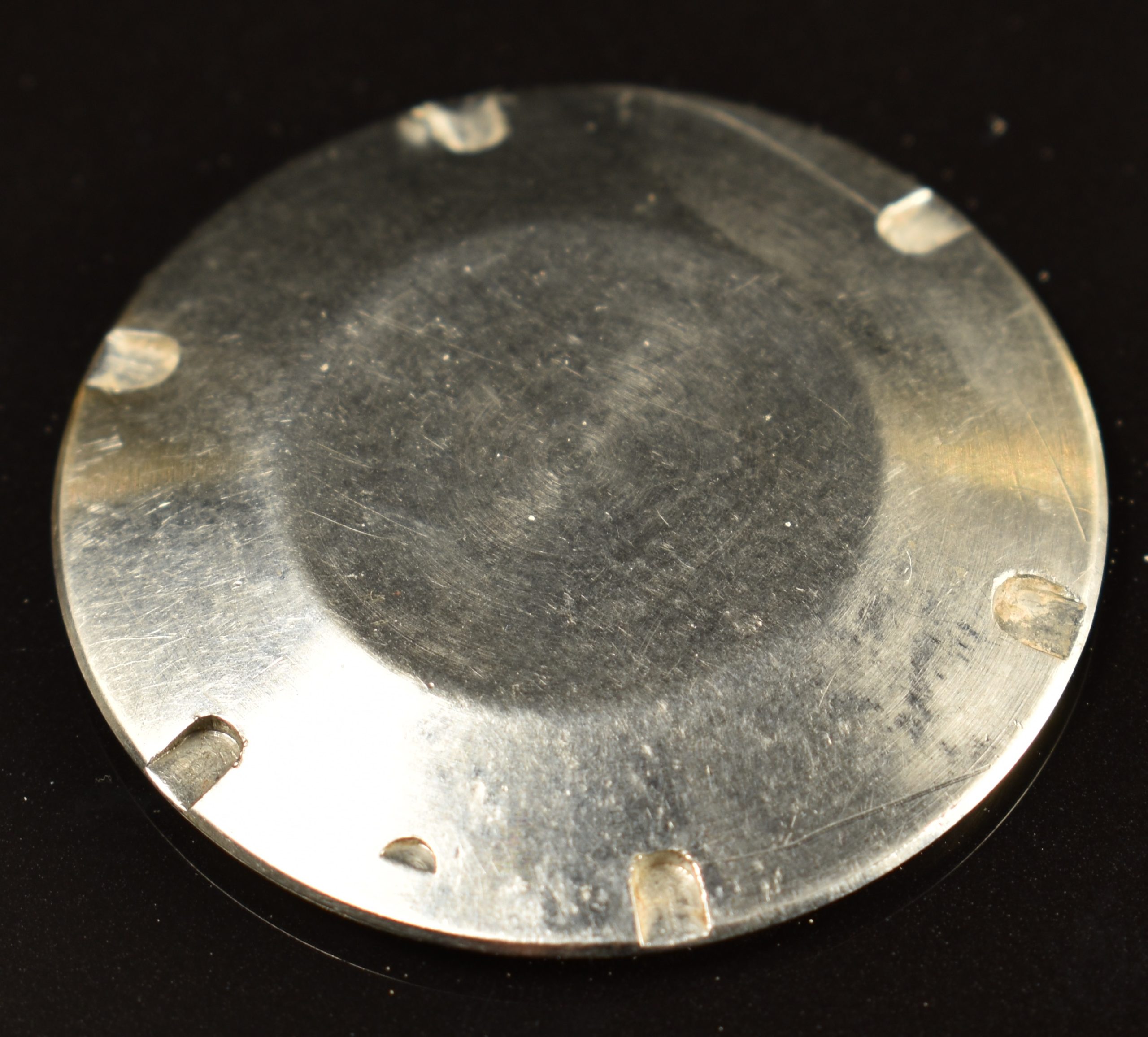
Harper Field sold another interesting Smiths in 2021, which is understood to be the former property of an ex-Smiths employee. Although casually dismissed as a ‘Frankenstein’ watch made from spare parts at the Smiths factory, our research has caused us to cast some doubt on this assumption.
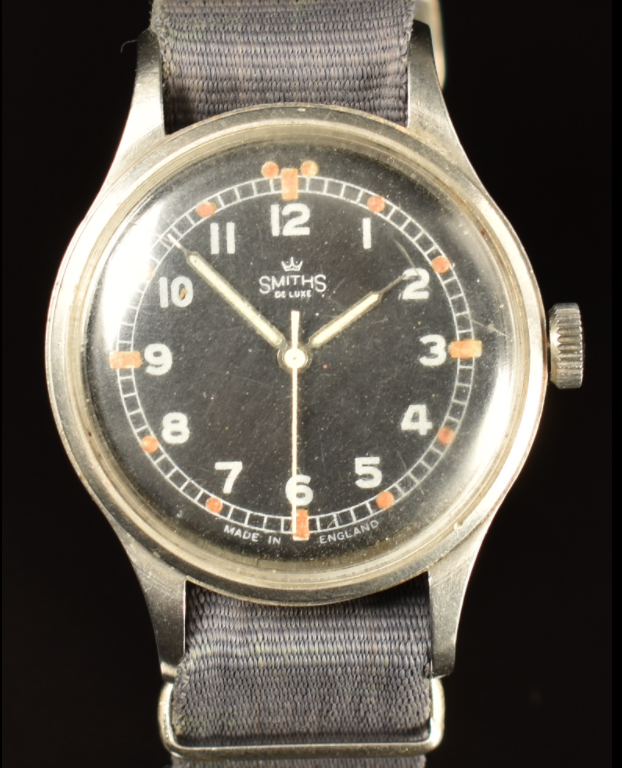
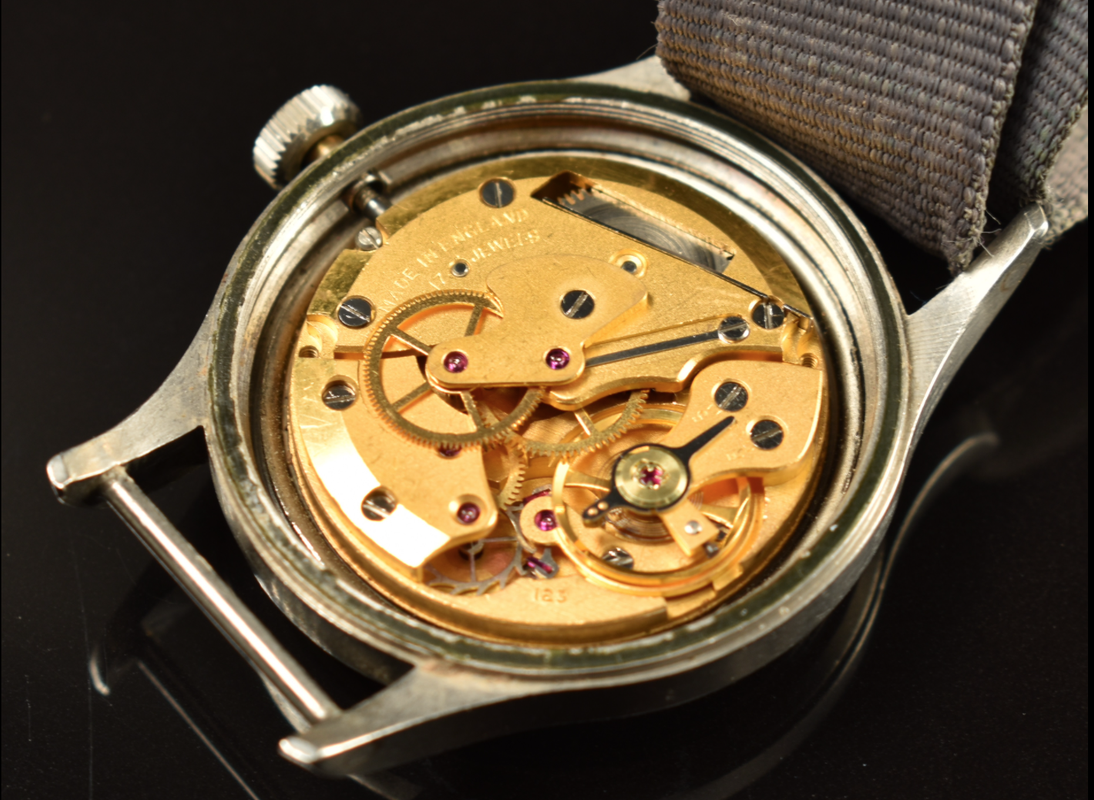
The watch features a Smiths De Luxe dial with syringe hands in a seemingly later and unmarked W10 case with matching crown. It is highly unusual to find a De Luxe dial inside a W10 case as the diameter of the dial should, in theory, be too big to fit into the case.
Strangely, the case back displays a half-milled key slot, suggesting an error occurred during its manufacture. The circular tooling marks inside the case back also appear more prominent when compared to other W10 cases.
The Smiths Astral 17-jewel movement is marked ‘123’, which dates it to December 1963, most likely making it a calibre 60464E, the earliest we have recorded until now. It had been described as a calibre 60466E in the auction listing. However, this is doubtful as the militarised 60466E with hacking mechanism did not begin production until around 1966. Again, the balance cock looks to be from an earlier De Luxe 27.CS movement. The watch, like the other sold by Harper Field Auctioneers, was fitted to an old NATO strap.
It would seem the watch displays the attributes of yet another early test piece. Should this be correct, its case may be one of the first to have been produced for the famous Smiths W10 contract.
To date, we cannot be certain who produced the cases for the Smiths W10, and it has always been assumed their initial design and manufacture would have commenced no earlier than 1965.
It is possible this watch and the Smiths with date calendar came from the same ex-Smiths employee. This may provide both watches with sound provenance that traces their origins directly back to Smiths.
The rare Zenith S.58 diver wristwatch is configured in a similar fashion to that of W10/0308.
The S.58 Mk I was first added to the Zenith catalogue in 1958 and produced at a time when the blueprint of how we perceive a diver’s wristwatch today had not been fully formalised. The watch features a similar multi-faceted screw down case back to that of W10/0308 together with a push-pull crown with no crown guards. The watch also features a smooth metal bezel and is thought to have been rated water resistant from 150 to 200 metres.
Released under the shadow of the Blancpain Fifty Fathoms, Rolex Submariner and later Omega Seamaster 300, a relatively small number of the S.58 were manufactured until the late 1960s. Notably, the S.58 Mk III issued in 1962 was modified to accommodate an outer rotating bezel.
The Zenith S.58 is a comparable contemporary to W10/0308. It demonstrates that other manufacturers producing dive watches in the late 1950s were working along the same lines as the men in white coats at Smiths.
In 1966, Smiths introduced their Astral Skin Diver to the civilian market, which was the first Smiths wristwatch to be declared ‘waterproofed’ to 200 metres.
Sadly, Smiths ceased their watch and clock production in 1971 and much of their records have since been lost or destroyed. This has caused a vast chasm of information to become unavailable, making the discovery of W10/0308 even more significant.
The Smiths W10/0308 is a truly remarkable discovery. It would seem to add a previously missing chapter to the story of British military watchmaking and sheds new light on Smiths’ involvement with the MoD during the early 1960s.
Whether viewed as an abandoned diver, a transitional prototype, or a glimpse into a road not taken, W10/0308 stands as compelling evidence that Smiths came surprisingly close to producing a fully British military dive watch.
If the Smiths W10/0308 had been produced, perhaps the holy trinity of British military divers, the Rolex Submariner, Omega Seamaster 300 and Lemania Dive Supervisor, would instead be known today as the ‘Fantastic Four’.
In the end, Ian Fleming’s James Bond would famously wear a Swiss Submariner, and Smiths’ presumed dive watch would remain an experiment confined to their workshop. Had a Smiths military diver become a reality, one might imagine it to be as recognisable today as Bond’s Aston Martin DB5 and Walther PPK.
Finest Hour would like to express their sincere thanks and appreciation to the following for their kind assistance in the preparation of this article: Konrad Knirim, Barry M Jones, Simon Freese, Jonathan Hughes, Simon Farrow, Harper Field Auctioneers & The British Watch & Clock Makers’ Guild.
“The Smiths That Never Was: Britain’s Lost Military Diver” has been published in Timepiece, the magazine of the British Watch & Clock Makers Guild (BWCMG).
The Guild considers it to be “an important record of an important watch, which will now be preserved in history”.
Thank you for your interest.